






NBA Rules, Scoring, Fouls and Shot Clock Explained
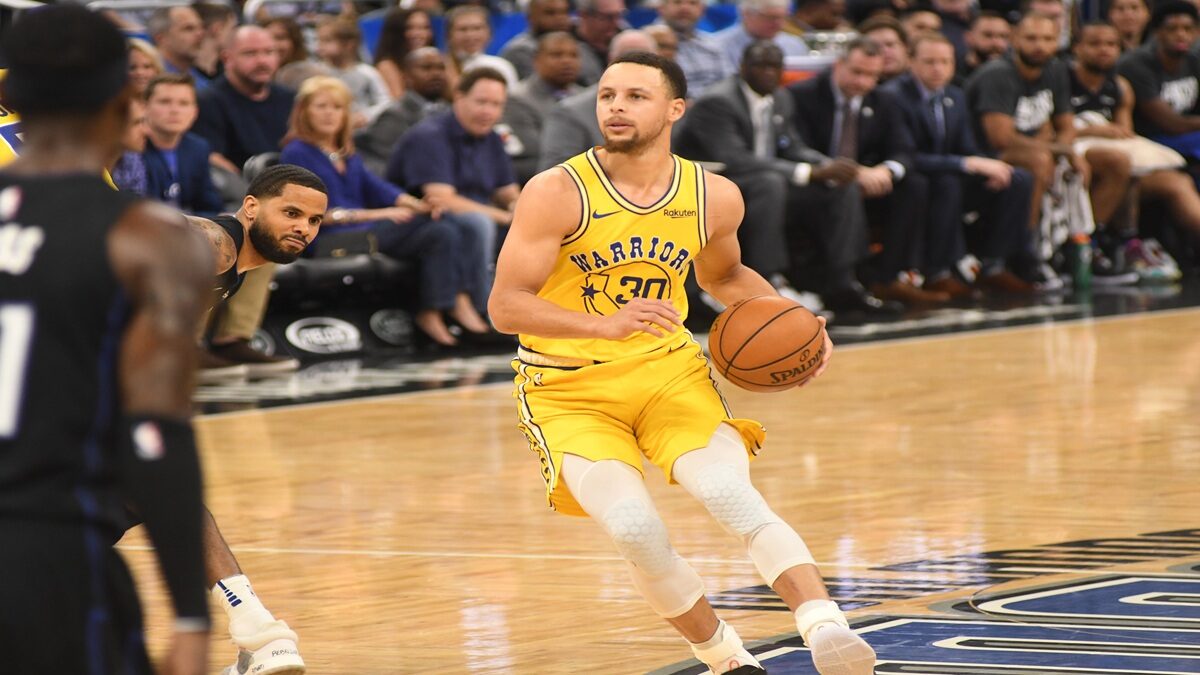
An overview of NBA basketball rules, including how games are structured, how scoring works, and how fouls, violations, free throws, and the shot clock affect possession. It also explains overtime, timeouts, positions, and common basketball terms.
The guide is written for new fans and covers the basics needed to follow a game, including why teams switch ends, how the bonus works, and what happens in playoff and review situations.
NBA rules can seem confusing at first, but the basic idea is simple. Two teams try to score more points than the other by shooting the ball through the basket. Each team has five players on the court, and the game is played at high speed with constant changes between attack and defence.
This guide explains NBA basketball in simple terms, including scoring, quarters, fouls, free throws, violations, the shot clock, overtime, timeouts, positions and common basketball terms.
NBA rules guide
Use these guides to go deeper into basketball, US sports and wider sports explainers.
What is the NBA?
The NBA basketball is the top professional basketball league in the United States and Canada. The league features 30 teams, split between the Eastern and Western Conferences.
A game is played between two teams. Each team has five players on the court at one time. The team with the ball is on offence. The team without the ball is on defence.
The offence tries to create a good shot. The defence tries to stop that shot, win the rebound, force a turnover or make the attacking team run out of time.
The sport looks simple when someone scores a dunk or a three-pointer. However, there are many rules behind each possession. That is why new fans often ask about travelling, fouls, free throws and the shot clock.
How does an NBA game work?
An NBA game is split into four quarters. Each quarter lasts 12 minutes. If the score is tied after four quarters, the game goes to overtime.
Teams attack one basket for two quarters, then switch ends after halftime. The game starts with a jump ball at centre court. After that, possession changes occur through baskets, rebounds, turnovers, fouls, and violations.
The clock stops often. It stops for fouls, free throws, timeouts, reviews, out-of-bounds calls and other stoppages. That is why a 48-minute game usually takes much longer to watch.
The official NBA rulebook confirms that regulation periods last 12 minutes and overtime periods last five minutes. It also sets out how scoring, timing, timeouts and end-of-period plays work. NBA Official Rulebook
NBA quarters explained
An NBA game has four 12-minute quarters. The first and second quarters make up the first half. The third and fourth quarters make up the second half.
There is a half-time break after the second quarter. Teams use this break to rest, adjust tactics and review what has happened.
If the score is tied after the fourth quarter, the game goes to overtime. Overtime lasts five minutes. If the teams are still tied, another overtime period is played.
There are no draws in the NBA. The game continues until one team wins.
| Game section | Length |
|---|---|
| 1st quarter | 12 minutes |
| 2nd quarter | 12 minutes |
| 3rd quarter | 12 minutes |
| 4th quarter | 12 minutes |
| Overtime | 5 minutes |
How NBA scoring works
NBA scoring is easy once you know where the shot is taken from.
A free throw is worth one point. A normal basket inside the three-point line is worth two points. A shot made from behind the three-point line is worth three points.
The three-point line is vital in the modern NBA. Teams use shooters to stretch the defence and create space near the basket. This is why three-point shooting has become such a major part of the game.
| Shot type | Points |
|---|---|
| Free throw | 1 point |
| Layup or dunk | 2 points |
| Mid-range shot | 2 points |
| Three-pointer | 3 points |
| Made shot plus foul | Basket counts, plus a free throw |
A player can also score an “and-one”. This happens when a player makes a shot while being fouled. The basket counts, and the player gets one extra free throw.
A four-point play is also possible. This happens when a player makes a three-pointer while being fouled, then scores the extra free throw. Embed from Getty Images
The shot clock explained
The shot clock is one of the most important NBA rules.
A team normally has 24 seconds to attempt a shot after gaining possession. The shot must leave the player’s hand before the clock expires. The ball must also hit the rim for it to count as a legal shot attempt.
If the team does not shoot in time, it commits a shot clock violation. The other team gets the ball.
The shot clock keeps the game fast. It stops teams from holding the ball for too long and forces constant attacking decisions.
Sometimes the shot clock resets to 14 seconds instead of 24. This often happens when the attacking team keeps possession after certain stoppages or offensive rebounds.
| Shot clock term | Meaning |
|---|---|
| 24 seconds | Normal time to attempt a shot after new possession |
| 14 seconds | Short reset in certain frontcourt situations |
| Shot clock violation | The team fails to attempt a legal shot in time |
| Rim touch | The ball must hit the rim to avoid a violation |
NBA fouls explained
A foul is illegal contact or illegal conduct.
Basketball is a contact sport, so not every bump is a foul. Players can hold their position, contest shots, set screens and fight for rebounds. However, contact becomes a foul when it gives one player an unfair advantage.
A defender may foul by hitting a shooter’s arm, blocking a player illegally, grabbing, pushing or making late contact. An attacking player can also foul by charging into a defender or pushing off to create space.
| Foul type | What it means |
|---|---|
| Personal foul | Illegal contact by a player |
| Shooting foul | Illegal contact while a player is shooting |
| Offensive foul | The attacking player creates illegal contact |
| Loose ball foul | Illegal contact while neither team has clear control |
| Technical foul | Unsporting behaviour or a rule/procedure issue |
| Flagrant foul | Unnecessary or excessive contact |
A player fouls out after six personal fouls in an NBA game. Once a player fouls out, he cannot return.
This is why foul trouble matters. If a star player picks up early fouls, the coach may rest him to avoid losing him later in the game.
Free throws explained
Free throws are uncontested shots from the free-throw line. Each successful free throw is worth one point.
A player usually gets free throws after being fouled while shooting. The number of free throws depends on the shot attempt.
If a player is fouled while shooting a two-pointer and misses, he normally gets two free throws. If he is fouled while shooting a three-pointer and misses, he normally gets three free throws.
If the shot goes in despite the foul, the basket counts and the player usually gets one extra free throw.
| Situation | Usual result |
|---|---|
| Fouled on missed two-point shot | Two free throws |
| Fouled on missed three-point shot | Three free throws |
| Fouled on made basket | Basket counts, plus one free throw |
| Technical foul | Usually one free throw |
Free throws can decide close games. Some teams intentionally foul poor free-throw shooters late in games. This can stop the clock and force the player to earn points from the line.
Team fouls and the bonus explained
Team fouls are counted separately from player fouls.
When a team commits too many fouls in a quarter, the other team enters the bonus. This means certain fouls lead to free throws even if the player was not shooting.
You may hear commentators say a team is “in the penalty”. This means the defending team has used up its allowed fouls for that quarter.
The bonus changes how teams defend. A small reach or grab can send the opponent to the free-throw line. Late in games, this can be costly.
NBA violations explained
A violation is different from a foul. It usually means a player or team has broken a rule without illegal contact.
The penalty is normally loss of possession.
| Violation | What it means |
|---|---|
| Travelling | A player takes too many steps without dribbling |
| Double dribble | A player stops dribbling, then starts again |
| Carrying | A player holds or turns the ball too much while dribbling |
| Out of bounds | The ball or player touches outside the court |
| Backcourt violation | The offence illegally returns the ball to the backcourt |
| Eight-second violation | The offence fails to cross half-court in time |
| Shot clock violation | The offence fails to attempt a legal shot in time |
| Three-second violation | A player stays too long in the lane |
Violations stop the game and give possession to the other team. They are a major part of basketball because they control movement, timing and spacing.
Travelling explained
Travelling is one of the most debated rules in the NBA.
In simple terms, a player cannot run with the ball without dribbling. A player must dribble while moving, unless he is taking legal steps after gathering the ball.
The gather step is where confusion starts. NBA players move quickly, and many use step-backs, euro steps, spin moves and drives to the basket. These moves can look like travelling if you do not understand when the ball is gathered.
A clear travel may occur when a player shuffles their feet, lifts their pivot foot illegally, or takes too many steps without dribbling.
Defensive three seconds explained
Defensive three-second stop defenders from standing in the lane for too long.
A defender cannot stay in the paint for more than three seconds unless he is actively guarding an opponent.
This rule keeps the lane open and stops big defenders from camping near the basket all game. It also helps create more attacking space.
If the defence breaks the rule, the attacking team gets a technical free throw and keeps possession.
Offensive three seconds explained
The offensive three seconds apply to attacking players.
An offensive player cannot stay in the lane for more than three seconds while his team controls the ball in the frontcourt.
This stops tall players from standing under the basket and waiting for easy passes. It also keeps the game moving.
The player can avoid the violation by leaving the lane or making an active move connected to the play.
Goaltending and basket interference explained
Goaltending happens when a player illegally touches a shot on its way to the basket.
If the ball is coming down towards the rim and has a chance of going in, a defender cannot block it. If he does, the basket counts.
Basket interference is linked to goaltending. It can happen when a player touches the ball or rim while the ball is on or above the basket cylinder.
These calls can be closed. A legal block can look like goaltending in real time. That is why some plays may be reviewed.
Timeouts explained
Timeouts allow teams to stop the game.
Coaches use timeouts to rest players, stop momentum, make substitutions, draw up plays or organise the defence.
Each team has seven charged timeouts during regulation play. Teams also get two timeouts in overtime. There are limits on how many can be used late in the fourth quarter.
Timeouts are especially important in close games. A coach may use one to advance the ball, set up a final shot or stop an opponent’s scoring run.
Coach’s challenge explained
The coach’s challenge allows a coach to ask the officials to review certain calls.
Not every play can be challenged. Coaches must choose the right moment. A challenge can overturn a foul, change possession or correct an out-of-bounds decision.
A successful challenge can be huge in a close game. However, using it too early can be risky if a bigger call happens later.
For examples of how calls are judged, the NBA’s video rulebook is useful because it shows real plays and explains the decision. NBA Video Rulebook
Jump balls explained
A jump ball starts the game. The referee tosses the ball into the air at centre court, and one player from each team tries to tap it to a teammate.
Jump balls can also happen during the game. This often happens when two opponents both have control of the ball, and neither can take it away.
This is called a held ball. In the NBA, held-ball situations are settled by a jump ball.
Winning a jump ball can matter late in close games. One extra possession can change the result.
NBA positions explained
NBA positions describe a player’s usual role on the court. Modern basketball is flexible, so many players can play multiple positions.
Still, the five basic positions are useful for new fans.
| Position | Main role |
|---|---|
| Point guard | Runs the offence and handles the ball |
| Shooting guard | Scores, shoots and defends guards |
| Small forward | Provides scoring, defence and wing play |
| Power forward | Rebounds, defends and scores near or away from the basket |
| Centre | Protects the rim, rebounds and scores inside |
In today’s NBA, positions are less fixed than before. Big players shoot threes. Guards attack the rim. Forwards often handle the ball.
That is why you may hear terms like combo guard, wing, stretch four or small-ball centre. Embed from Getty Images
Common NBA terms explained
NBA broadcasts use a lot of basketball language. These are some of the most useful terms for new fans.
| Term | Meaning |
|---|---|
| Assist | A pass that leads directly to a made basket |
| Rebound | Collecting the ball after a missed shot |
| Turnover | Losing possession without a shot |
| Steal | Taking the ball from the opponent |
| Block | Stopping or deflecting a shot attempt |
| Pick and roll | A screen followed by a move towards the basket |
| Fast break | A quick attack before the defence is set |
| Isolation | One player attacks a defender one-on-one |
| Paint | The marked area near the basket |
| Perimeter | The area outside the lane, often near the three-point line |
| Clutch | Important moments late in a close game |
| Triple-double | Double figures in three stat categories |
NBA playoffs explained
The NBA regular season decides which teams reach the postseason.
The best teams from each conference qualify for the playoffs, while other teams may enter the Play-In Tournament depending on their final position.
The playoffs are played in best-of-seven series. This means the first team to win four games moves on.
The winners of the Eastern Conference and Western Conference meet in the NBA Finals. The team that wins the Finals becomes the NBA champion.
Playoff basketball is often slower and more physical. Teams know each other better, so tactics, matchups and late-game execution become even more important.
How to watch the NBA in the UK
NBA games are shown in the UK through different broadcasters and streaming options, depending on the rights deal and the fixture.
Because of the time difference, many games take place late at night or early in the morning for UK fans. Weekend games and selected earlier tip-offs are often easier to watch live.
Fans can also follow highlights, box scores, recaps and league news online.
When adding subscription, ticket, or merchandise prices to a UK-focused article, use pounds first, followed by dollars in brackets, such as £25 ($31). That keeps the format clear for UK readers while still helping fans who see US prices.
Final word
NBA basketball becomes much easier to follow once you understand the basics.
Start with the scoring system, quarters, shot clock, fouls and violations. Then learn the smaller rules as you watch more games.
A three-pointer is worth three points. A normal basket is worth two. A free throw is worth one. A team normally has 24 seconds to shoot. Players foul out after six personal fouls. Overtime lasts five minutes.
From there, the game starts to make more sense. You notice why teams value spacing, why coaches protect players in foul trouble, why timeouts matter and why the final two minutes can take so long.
The NBA is fast, physical and tactical. But the main rules are simple once they are broken down clearly.
FAQs
What are the basic rules of NBA basketball?
The basic rules of NBA basketball are that two teams of five players try to score by shooting the ball through the basket. Teams must dribble while moving, shoot before the shot clock expires and avoid fouls or violations.
How many quarters are in an NBA game?
An NBA game has four quarters. Each quarter lasts 12 minutes. If the score is tied after the fourth quarter, the game goes to overtime.
How long is NBA overtime?
NBA overtime lasts five minutes. If the score is still tied, another five-minute overtime period is played.
How does NBA scoring work?
A free throw is worth one point. A shot inside the three-point line is worth two points. A shot from behind the three-point line is worth three points.
What is the NBA shot clock?
The NBA shot clock is the time a team has to attempt a shot. It normally starts at 24 seconds after a new possession. If the team does not attempt a legal shot in time, it loses the ball.
How many fouls before a player fouls out in the NBA?
A player fouls out after six personal fouls in an NBA game. Once a player fouls out, he cannot return.
What is travelling in basketball?
Travelling happens when a player takes too many steps without dribbling or moves the pivot foot illegally. It is a violation, and the other team gets possession.
What is goaltending in the NBA?
Goaltending occurs when a player illegally touches a shot on its way down towards the basket while it still has a chance to score. If a defender commits goaltending, the basket usually counts.
What is the bonus in NBA basketball?
The bonus happens when a team commits too many fouls in a quarter. Once the other team is in the bonus, certain fouls lead to free throws even if the player was not shooting.
What is the difference between a foul and a violation?
A foul usually involves illegal contact or unsporting conduct. A violation is a rule break without illegal contact, such as travelling, double dribble or a shot clock violation.
What's Your Reaction?
 Like
0
Like
0
 Dislike
0
Dislike
0
 Love
0
Love
0
 Funny
0
Funny
0
 Angry
0
Angry
0
 Sad
0
Sad
0
 Wow
0
Wow
0