







The Pitt Season 2 Opens with Change, Tension, and Unfinished Business - Review
.jpg?#)
The Season 2 premiere of The Pitt opens on an almost deceptive note of calm. Robbie rides his motorcycle toward the hospital on a bright July 4th morning, uplifting music playing as if the day might actually go easy on him. That illusion shatters the moment he steps into the ER. It’s packed, buzzing, and relentless, exactly where the show thrives.
A timestamp on screen (“Hour 1: 7:00 a.m. – 8:00 a.m.”) immediately reminds us what The Pitt does best: grounding its chaos in real-time urgency. This is not a heightened, glossy medical drama, it’s a pressure cooker, and Season 2 wastes no time sealing the lid.
Robbie’s Last Day—and the Weight of What Came Before
This episode carries the emotional weight of history. Robbie walks past a plaque commemorating the Pittfest tragedy from last season, and the moment lands quietly but powerfully. There’s no speech, no flashback, just reflection. It’s a reminder that this hospital, and these people, are still carrying trauma even as the work never stops.
Robbie insists the morning doesn’t feel “too crazy yet,” which, in The Pitt language, is basically a curse. He’s heading into a three-month sabbatical, but before he can leave, he has to contend with something far more unsettling than a busy ER: change.
Enter Dr. Baran Al-Hashimi: Order vs. Instinct
The arrival of Dr. Baran Al-Hashimi immediately shifts the tone of the episode. She’s efficient, strict, technologically forward, and utterly uninterested in easing into the culture of The Pitt. She’s running drills, critiquing interns, and implementing system-wide changes without consulting Robbie, on his last day.
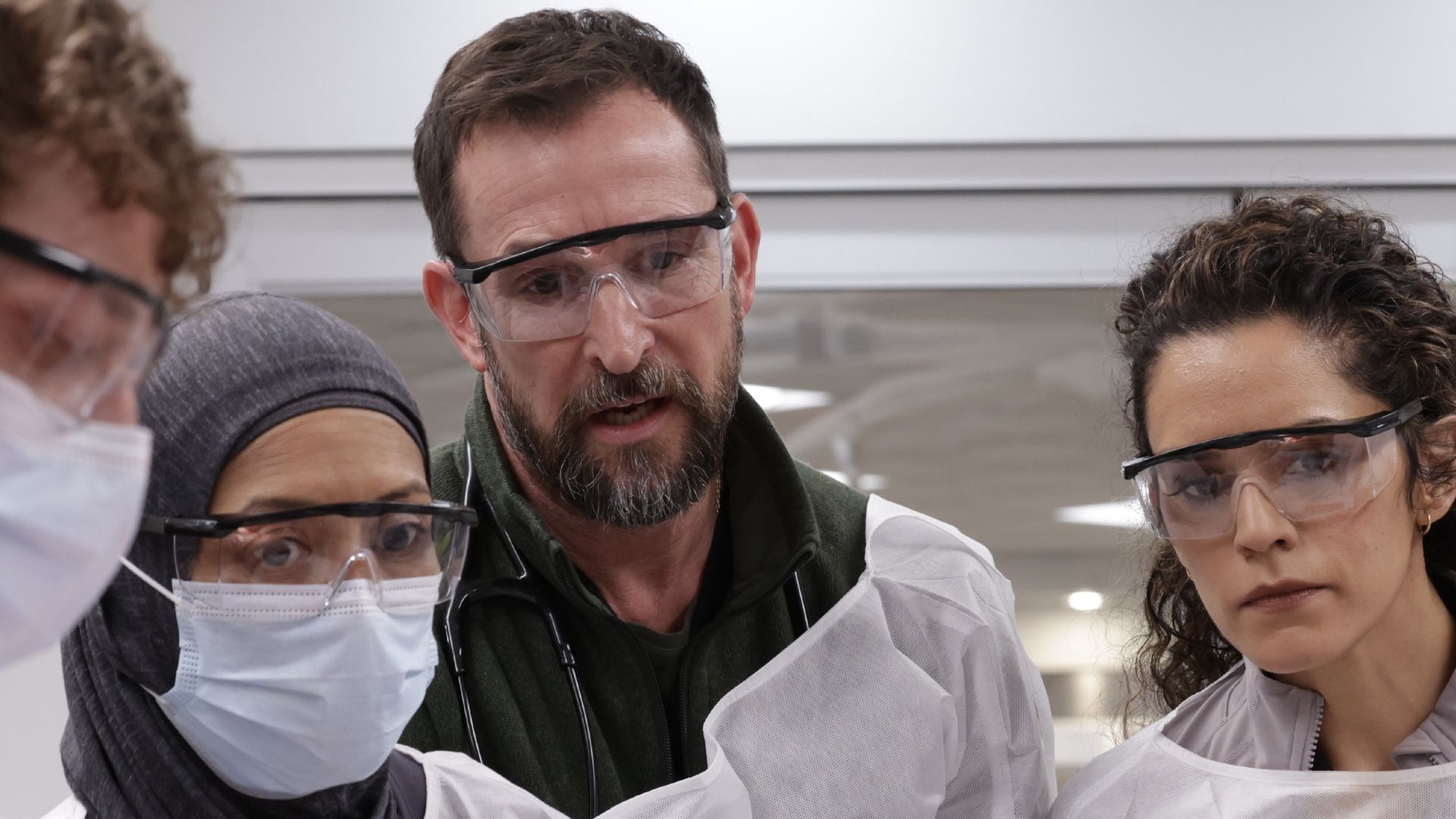
Their clash is immediate and layered. Robbie represents intuition, experience, and institutional memory. Al-Hashimi represents data, systems, and the future of medicine. Their arguments aren’t petty, they’re ideological. When they talk over each other during a trauma case, it’s not just about treatment plans; it’s about control, philosophy, and respect.“7:00 a.m.” – THE PITT, Pictured: Sepideh Moafi as Dr. Al-Hashimi and Noah Wyle as Robbie. Photo: Warrick Page/HBO Max ©2026 Warner Bros. Discovery, Inc. All Rights Reserved.The tension is deliciously uncomfortable, especially as Robbie learns she’s already rolling out “patient passports,” a tool meant to give patients transparency about wait times and procedures. It’s not a bad idea, but the way it’s introduced underscores the episode’s central theme: progress without communication can feel like invasion.
The Ensemble Shines in Controlled Chaos
One of the premiere’s greatest strengths is how well it balances its large ensemble without losing focus.
Whittaker, now a resident, quietly steps into a leadership role, correcting callous med students and insisting on respect for a deceased patient. It’s a deeply earned moment after everything he endured last season.
Langdon’s return is understated but emotionally loaded. He looks healthier and calmer, but his anxiety lingers. His decision to confess his opioid addiction to Louie, apologize for stealing his meds, and own his absence is one of the episode’s most honest scenes. Louie’s acceptance doesn’t feel miraculous, it feels human.
Dana’s return brings stability and warmth. Her dry humor (“Who else is gonna get this place through the Fourth of July weekend?”) masks resilience forged through trauma. Watching her gently mentor a lost new nurse reinforces why she’s the emotional backbone of the ER.“7:00 a.m.” – THE PITT, Pictured: Gerran Howell as Whittaker and Lucas Iverson as James. Photo: Warrick Page/HBO Max ©2026 Warner Bros. Discovery, Inc. All Rights Reserved.Even smaller moments, like Mel’s looming malpractice deposition, Santos navigating second-year resident misery, and Samira’s unraveling family situation, add texture without overwhelming the narrative.
Patients as Mirrors, Not Plot Devices
The premiere excels at using patient stories to reflect the inner lives of its doctors:
A woman convinced she’s dying despite clean tests highlights how fear manifests when medicine can’t provide emotional reassurance.
A man drowning in supplements mirrors medicine’s constant tug-of-war between science and belief.
Cassie’s belligerent patient, who suddenly becomes confused, underscores how quickly situations, and assumptions, can change.
Santos’ patient, Kylie, is particularly haunting. What begins as concern over possible abuse pivots sharply when the urine sample is pure blood, forcing a sense of urgency.
And then there’s the baby left in the bathroom, a moment that never veers into melodrama. The staff reacts with grim efficiency, dark humor, and compassion, because that’s how survival looks in this world.
A Subtle, Unsettling Final Note
The episode ends not with a crisis, but with unease. The baby’s tests come back normal, yet Dr. Al-Hashimi can’t stop staring. Samira notices. We notice. The moment lingers just long enough to tell us something isn’t over, something hasn’t been resolved.
It’s a quiet cliffhanger, and a confident one.
Final Thoughts
The Season 2 premiere of The Pitt doesn’t try to outdo last season’s spectacle. Instead, it deepens its characters, sharpens its themes, and reinforces why this show stands out in the medical drama landscape. It’s about systems versus people, progress versus culture, and the cost of caring in a place that never stops demanding more.
If this episode is any indication, Season 2 isn’t interested in being louder. It’s interested in being truer, and that makes it even more compelling.
What's Your Reaction?
 Like
0
Like
0
 Dislike
0
Dislike
0
 Love
0
Love
0
 Funny
0
Funny
0
 Angry
0
Angry
0
 Sad
0
Sad
0
 Wow
0
Wow
0