






The Celtics’ overachievement only set them up for failure in NBA Playoffs


I’ve now written a sappy Boston Celtics playoff retrospective four times in the last five years. They range from completely overblown metaphor (I think I called the Miami Heat a history-repeating killer-basketball robot-wizard Sea Cucumber once) to full-on soliloquies about the meaning of life. We’re not doing any of that this time.
The Celtics blew a 3-1 lead to the Philadelphia 76ers, lost a heartbreaking Game 7 at home and I’m not particularly happy about it. But I shall resist the impulse to wax poetic about this team’s spiritual place in the space-time continuum because we have books to balance. The Celtics, particularly, have to attend to some serious business. But we will, out of the goodness of our hearts, quickly press F to pay respects.
Basketball is a cruel sport because it is always reduced to its simplest variable. You play somewhere between 82 and 100 games, thousands of minutes, months of physical toil and deal with pressure most of us could not imagine, all for a chance to attempt a shot to maybe win it all. The Celtics had three good looks to take the lead down by one in the fourth quarter of Game 7, and they missed all three.
The Celtics fought tooth and nail all season for that chance. They entered the season with too many varied expectations for me to generalize, but I can say with total accuracy that I did not believe in them whatsoever. I called for the team to maybe actually trade Jaylen Brown before the season, a foot I will gladly put in my mouth — nothing I had seen from him so far suggested he had this MVP-level campaign in him. I likewise had no reason to expect Neemias Queta could be a legit, NBA-caliber starting center, nor belief that Payton Pritchard could be more than a glorified three-point specialist. I was wrong on every count.
In that way, the Celtics were playing with house money in the casino of my brain. Jayson Tatum returned from injury and things looked like sunshine and lollipops. Expectations change, and they were dubbed “the favorites in the East” after playing above their heads for five straight months and adding back their captain. But Tatum got hurt again, missed Game 7, and “the favorites in the East” blew a 3-1 lead to the team they used to own. I could chop that long ways, short ways, diagonally or even cut off the crust; no matter how I slice it, that’s embarrassing.
First item of bookkeeping: this is a big series for the “when healthy” brigade of NBA media, because “when healthy,” the 76ers were a better team than the Celtics. I said this three weeks ago when ranking how scary each Play-In team was. I even said it before the season, when I declared the 76ers the low-key favorites in the East. I didn’t say it … all that seriously, I admit, but I did say it!
I wouldn’t necessarily consider myself part of the “when healthy” brigade, but I tilt towards that group; “oh (insert player or team) will never be healthy” isn’t a particularly interesting line of logical reasoning. It’s an unfalsifiable claim that assumes medical information you do not have that can be used to invalidate any hopes and dreams at any time. You could say, “oh Victor Wembanyama will never stay healthy” as a reason for thinking Cooper Flagg is the league’s most valuable young player (Max Kellerman did), but it’s a super bad-faith argument. The same goes for saying the 76ers have no chance to make the NBA Finals — if Paul George and Joel Embiid are just… chillin’? They totally could.
But the Celtics were favored fairly heavily in the series and went up 3-1. Yes, Embiid’s status was heavily unknown, and books probably would have had it closer if they knew he would look almost like MVP Embiid for half the series. But it’s also not like Embiid just parachuted in and said “okay, it’s MVP Embiid time.” Boston’s deficiencies had more to do with how well he played than some random black swan event, and his quality was the reason the 3-1 lead didn’t hold.
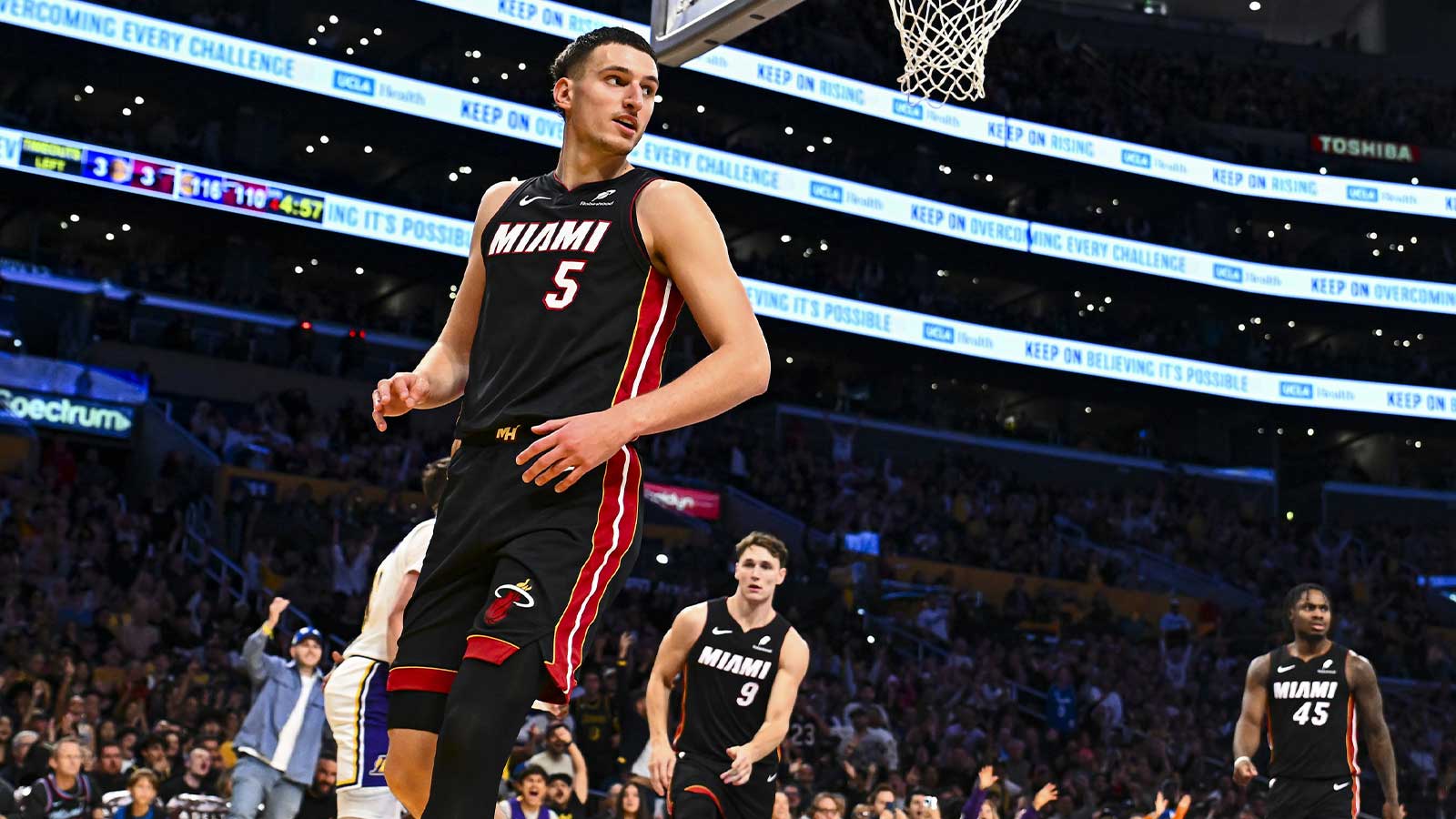
That leads us to business item number two: the Celtics are not a small team, but they lack defensive size and rim protection. Queta and Luka Garza are extremely limited interior defenders who could not stay out of foul trouble, and the Celtics wound up doubling Embiid on most possessions in Game 7 with Jaylen Brown as his primary defender. Credit to Nick Nurse (who took a gamble bringing him back from injury when it felt like Adem Bona and Andre Drummond had found something in the series) for realizing Embiid could run the Celtics over like a Mack truck if he could just get out there.
Shoring up that interior defense is priority one, two and three for the Celtics this offseason. Another big, Nikola Vucevic, will be coming off the books to the delight of all Celtics fans, and his arrival via trading Anfernee Simons accomplished the Celtics’ single goal coming into the season: get under the luxury tax. Now, they will actually have some flexibility, regular roster-building resources and a few sizable trade exceptions to use.
I could explain all the extension candidates, team options, mid-level exceptions, the works, but I can’t explain it better than ESPN’s Bobby Marks — a legit wizard with this stuff — so you should check out his offseason guide for the Celtics for all the particulars. What I can do is ask some hard questions, one’s Boston will have to answer through all the financials you can read about at your leisure.
Question 1: How much longer will Jayson Tatum, Derrick White and Jaylen Brown form the nucleus of this roster? I feel reasonably certain that, unless he demands a trade, Tatum will be on the Celtics for his entire career. Those other two I simply don’t know. White is 32, and Brown just showed he’s at his best when Tatum isn’t on the court — that statement will be resisted by certain dogmatic elements in Celtics nation, but it is demonstrably true. I love Jaylen Brown. But he and Tatum have already won a championship together, and I wouldn’t necessarily blame Jaylen if he wanted to be the bus driver for more than half a season on his own team.
Question 2: How much are Payton Pritchard and Neemias Queta worth? Both are extension eligible, and Pritchard in particular is making an absolute pittance relative to his value as a scorer. Still, the Celtics will get real expensive, real quick if they shell out major dollar bills for two potentially replaceable pieces that were critical this year — it is worth wondering if they should be critical, or if Pritchard is better as a change-of-pace microwave off the bench rather than someone to close with.
Question 3: Which bench spark plugs are keepers? Calling Hugo Gonzalez a “fan favorite” is the understatement of the decade, but he has a long way to go as an offensive player. Same goes for Baylor Scheierman, who is a bit more sophisticated as a scorer but looked lost in the postseason. If you keep both of them, what’s up with Ron Harper Jr. and Sam Hauser? How about Garza, who is already behind Queta even when everyone knows the big rotation needs an upgrade?
Beyond “get a center,” which is truer than true, those are the main things to think about this offseason. Thankfully for my sanity, I have achieved galactic levels of trust in Brad Stevens, the Celtics’ former head coach and now President of Basketball Operations, and essentially give him carte blanche to do what must be done. We done here? Oh, I guess I see one more thing on the meeting agenda before we go get lunch at Cava.
When your team gets bounced from the playoffs in the internet age, one is exposed to a range of reactions; some silver-lings, some apocalyptic doomsday preppers, some coach-firers, even some “Neemias Queta was so open” screenshot-takers, but I find it best to think of all reactions in binary: they are either your reaction, or someone else’s reaction. The vast majority of them are just forms of coping, and provided they don’t delve into any unsavory territory, all reactions are valid and should be allowed to marinate before we decide who’s right and who’s wrong. Even the haters, fans of other teams, have earned their moment to hate.
My reaction, which expresses merely my view and no one else’s, is this: the 2025-26 Boston Celtics overachieved so much that it set them up to underachieve. Among the many discussions of their failure in the series, that is a wholly unique accomplishment.
What's Your Reaction?
 Like
0
Like
0
 Dislike
0
Dislike
0
 Love
0
Love
0
 Funny
0
Funny
0
 Angry
0
Angry
0
 Sad
0
Sad
0
 Wow
0
Wow
0