









Messi isn’t enough for MLS to be massive league that America deserves after USMNT’s World Cup summer

Major League Soccer will never have a better opportunity than this.
Which means that if MLS can’t turn a scorching-hot World Cup and the regular presence of Lionel Messi in Miami pink into a lasting American breakthrough, soccer will never make the big time in the United States.

USMNT’s World Cup end hands ball to MLS
What’s happening right now with packed NFL stadiums and millions of proud fans bouncing from Los Angeles and Seattle to Boston, Dallas, Houston and Kansas City is amazing.
The massively hyped 2026 World Cup has exceeded expectations and already set all-time attendance records, despite Mauricio Pochettino‘s USMNT squad falling 4-1 to Belgium on Monday in a humbling end.
But where does soccer (aka football) go from here in the United States?
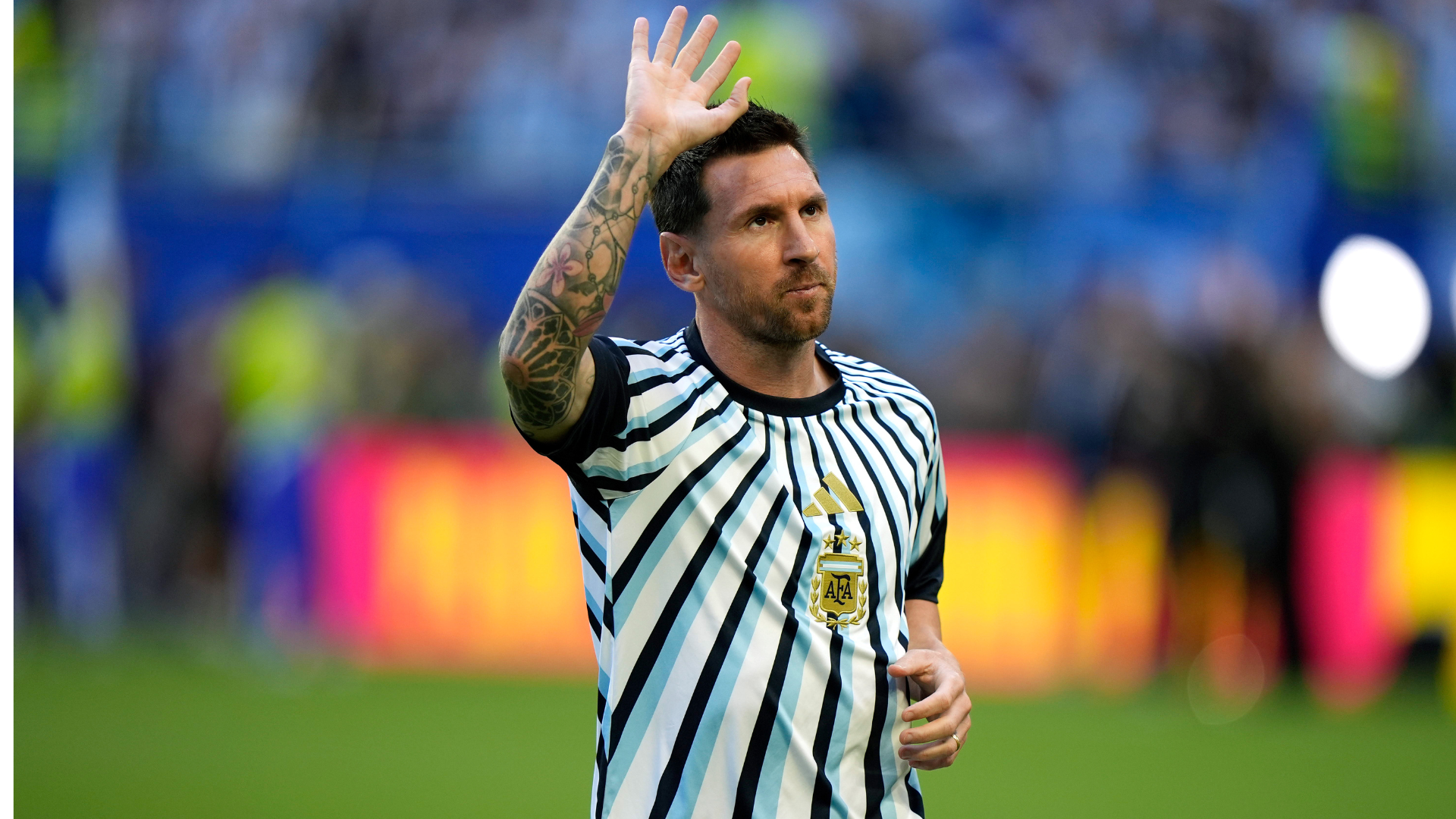
That’s the question that should already be bouncing through the halls of MLS headquarters, while England prepares for a huge quarterfinals match vs Erling Haaland and Norway, and defending World Cup champion Messi aims for the 2026 Golden Boot.
“We’ve come so much further than I would have ever thought in 1994,” Tab Ramos, a starting midfielder on the 1994 USMNT World Cup squad, exclusively told talkSPORT.
“Of course, we still have a long way to go because, culturally, we’re still not a soccer nation, by far. I could name you six other sports that are more important in the US than soccer still today, as we’re speaking. But we’ve come a long way and we have to be happy about that.”
USA’s best players will return overseas
Folarin Balogon became a USMNT hero before suddenly becoming the centerpiece of an international controversy blending sports with power and politics.
But the London-born striker plays for Monaco in his pro career and has been linked with a potential move to Brighton, Leeds United, Coventry City or Hull City.
All four of those teams compete in the Premier League, which is the best football league in the world when the World Cup isn’t on TV.


Christian Pulisic, Tyler Adams, Chris Richards and Antonee Robinson also have either English or European football ties now that they’ve taken off their flashy red-and-white Stripes jerseys for the last time in the 2026 World Cup.
Not even the addition of Messi has lifted MLS to a major sport in America, where it still struggles to get prime-time coverage on ESPN and is rarely discussed on US sports radio.
“You could bring Pep Guardiola over. It’s not going to change that,” Brad Friedel, former USMNT and longtime Premier League goalkeeper, exclusively told talkSPORT while discussing MLS’ growth and remaining hurdles.
“The system could change a little bit. But it’s the culture, it’s the kids, it’s the wanting, it’s the thinking, ‘This is my path.’ “
MLS’ annual revenue for 2025 has been estimated at $1.8 billion, while the Premier League raked in almost $9bn.
Beckham and Rooney didn’t push MLS to top
Big-name signings including David Beckham, Wayne Rooney, Zlatan Ibrahimovic, Thierry Henry and Son Heung-min highlight the gradual rise of MLS, which now includes 30 teams and is light years beyond its startup status after the 1994 World Cup.
“When you think about the last World Cup that was played in the US, it birthed the MLS,” USMNT and Crystal Palace defender Chris Richards exclusively told talkSPORT.
“Maybe it’s the reason why my dad allowed me to pick up a soccer ball or why my mom allowed me to pick up a soccer ball when I was younger.”
Where does MLS go now?

Major League Soccer was born out of the 1994 World Cup in the USA.
Former USMNT and Premier League goalkeeper Brad Friedel exclusively spoke with talkSPORT to discuss the rise of MLS — and his concerns about the league’s future.
Friedel on MLS: “It has grown and grown for the better. My worry is this with MLS — actually MLS, USL, it doesn’t really matter. My worry is that the viewing figures don’t increase … the Apple TV deal has been struggling. It’s well documented, even though at beginning they wanted to sugarcoat it. If they don’t get a television contract that pays at least the salary cap of all the teams, plus some, there’s going to come a time where the ownership groups just say, ‘Enough is enough,’ on the losses. Because they’re all losing, because it’s a single entity.
“So if Inter Miami does really well, they have to share in the losses of the league, so everyone still loses. Now some of the clubs may do it, if you’re in LA. And Seattle, I assume, does quite well. … Some of them might do well with other events at their stadium, so they might have a subsidiary business to make to make some money. But no one’s making money in the football there, soccer there. So my worry is, does this last for another 10 years? Because, I mean, how many billionaires are out there, billionaire consortiums, that are going to pay $500 million franchise fees? That’s why you see so many American owners coming over to Europe. Why? Because you own stadium, you own land, you own training ground. And you’re not paying $500 mil upfront for a franchise fee system that, if everyone keeps losing money, what happens with the franchise fee eventually? It invariably is going to go down — unless they get the media rights deal. If they get the media rights deal, then everything will be great. It really will.
“But I really worry because the media companies are not stupid and they base it off viewing figures. And if the viewing figures aren’t there — that’s why I think everyone’s hopeful that this World Cup brings it up again. The Club World Cup, they hope, would have increased it. You have Olympic events, they hope increase it. The women’s World Cup, and they hope they increase it again. But that’s, I think, in the real closed door meetings, that’s the conundrum that they’re talking about.”
But the NFL ($22.5bn), NBA, MLB, college football and college basketball easily eclipse MLS, and most of the league’s top signings have occurred toward the end of the players’ careers.
They’re cashing in on their international names, building their brands in the US and extending their time on the pitch.
To Friedel, big money is one of the key factors holding back MLS’ overall growth.
Messi Effect is limited in crowded sports scene
“I looked at the (Los Angeles) Dodgers recently, it was ($420) million on their wage bill,” Friedel said.
“The highest in MLS is Inter Miami at $54 million. But like $30 (million) of that is Messi, right? Most of the teams are right around the $20 to $25 million. And some of the teams go down into the $15 million, but they all lose money because there’s no TV contract.
“The reason the Dodgers have a wage bill like that is because of their media rights deal. Same in NBA, same in NFL. And the average salaries in MLS have gotten a lot bigger, but they’re still the smallest of all the sports by a long way.
“So you still don’t grow up as a kid — you just turned 10 years old and you’re now reading sports headlines on your tablet or whatever. You don’t read about the MLS player who has just signed a six-year, $220 million deal. You see that in all the other sports. So it automatically attracts you to that.
Coming to America

How the 1994 World Cup changed soccer in USA – from tourists in Italy to better than England and MLS
Ranking the World Cup venues – from New York to Los Angeles, a string of spectacular venues will play host to the 2026 World Cup
The $9bn pitch built for Ronaldo’s last World Cup – ‘Forever’ grass, artificial sunlight and closed roof
“I don’t know in my lifetime if I’m ever going to see the change. I don’t think it will anytime soon.”
MLS and Apple TV agreed to a 10-year, $2.5bn broadcasting rights package in 2022.
But the deal is now set to end three and a half years earlier than expected.
The adoption of a European-style fall-to-spring season schedule in 2027 should also aid MLS’ growth, and the attempt to crack the market in the contractual pursuit of the best football talent in the world.
MLS must step up its international game
“To align with the European calendar means a lot, definitely from a player standpoint, bringing players in and transferring players out and just the competition,” LA Galaxy president and COO Tom Braun exclusively told talkSPORT correspondent Ben Jacobs during the World Cup.
“So I think from a global perspective, it’s definitely going to be something that has a meaningful impact. Not only for the team on the field, but also the business, as well.”


Yet not even watching Messi — the GOAT in football history — nightly across America has pushed MLS to the forefront of the USA sports conversation.
The 2026 World Cup has done that in one buzzing month, and soccer has never been more popular from California to Florida.
The real question is what MLS is going to accomplish once a brilliant World Cup ends on July 19.
USMNT is done in 2026 but the fight for better soccer in the USA is just beginning.
“MLS has from (19)95 grown in areas that other leagues couldn’t grow anymore, because they’re already developed,” Friedel said.
“(The) infrastructure, the stadiums, the training grounds, the performance departments, the academy setups. The coaching education is much better. The coaches are better.
“The areas that haven’t really changed — well, they changed a little bit, but not to the point of making as big of a difference. And this isn’t a fault of MLS. This is the United States. This is the culture of the United States.”
World Cup WhatsApp
Don't miss an update from talkSPORT in our dedicated World Cup WhatsApp channel.
Search for ‘talkSPORT World Cup’ in your ‘Updates’ tab on WhatsApp and we’ll drop the proper, unfiltered football chat straight to your lock screen—no fluff, just pure talkSPORT energy.
It’s where you’ll find out all the new rules to watch out for, England and Scotland reaction and big match player ratings.
Plus there will be loads of debates on the biggest talking points as Haaland, Mbappe, Kane and the biggest names in football descend on America, Canada and Mexico.
What's Your Reaction?
 Like
0
Like
0
 Dislike
0
Dislike
0
 Love
0
Love
0
 Funny
0
Funny
0
 Angry
0
Angry
0
 Sad
0
Sad
0
 Wow
0
Wow
0