






How Victor Wembanyama became the NBA’s newest villain


To get a sense of how universally beloved Victor Wembanyama was before playing a single second of NBA basketball, look at the way the best players in the world described him ahead of his first professional minutes.
“An alien,” said LeBron James.
“I think he’s going to be one of the best to play this game,” added Giannis Antetokounmpo.
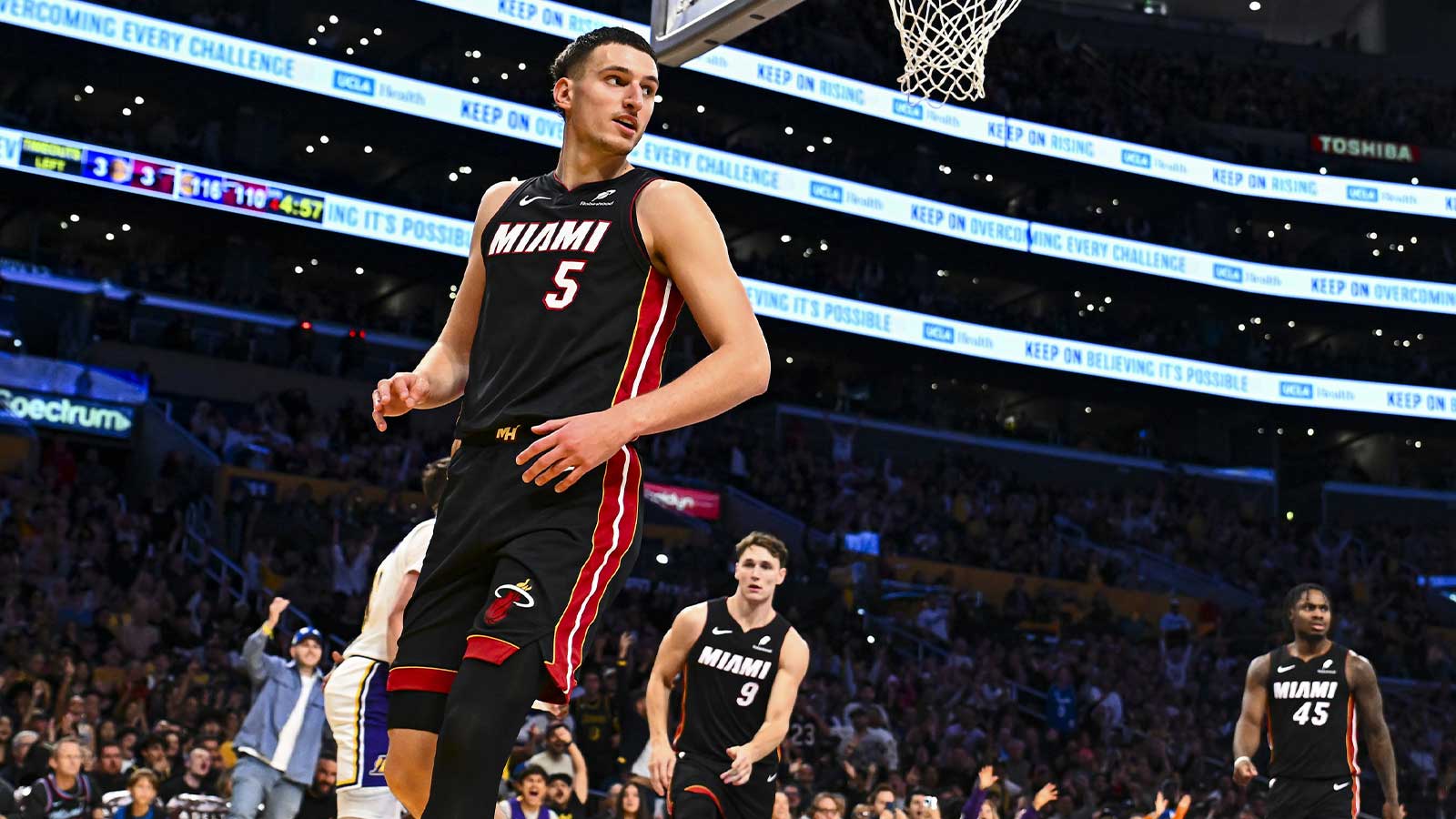
Wembanyama had a higher approval rating than pizza and puppies when the San Antonio Spurs selected him first overall in the 2023 NBA Draft out of Le Chesnay, France. The 7-foot-4 center with an 8-foot wingspan walked into the league looking like a wacky waving inflatable tube man and became the first unanimous Rookie of the Year since 2016, averaging 21.4 points and 10.6 rebounds. Despite being a 20-year-old rookie, he led the league in blocks with 3.6 per game, finishing second in Defensive Player of the Year voting behind fellow French big man Rudy Gobert. “Let [him] win it now,” Wembanyama said. “Because after that, it’s no longer his turn.”
Confident quips like that one — along with various philosophical ruminations — only worked to further endear Wembanyama to the basketball world and beyond. Legions of new fans from all over fell in love with his rare combination of brash competitiveness, raw vulnerability, confidence, calculation, and, of course, his one-of-a-kind style of play. One couldn’t help but stare in wonder at the way he dominated the game on the defensive end, where the biggest, fastest athletes in the world veered away from him at all costs.
Off the court, Wembanyama was unafraid to stand out in historically unmasculine ways. “Personally, I refuse to carry the burden of having to hide my emotion,” he said after crying on the court following a big Spurs win. In a league full of guarded superstars who would rather act tough than stand out, Wembanyama’s vulnerability was a breath of fresh air. “He has a spine, guts, and heart,” NBA journalist Michael Pina wrote. “To soberly possess such authenticity at that age, in front of the world, is special. It makes him such an easy player to bet on. He cares deeply.” The recognition only continued to build as Wembanyama won the 2026 Defensive Player of the Year award and finished third in MVP voting after leading the upstart Spurs to 62 wins and a spot in the NBA Finals this June.
However, over the past few weeks, people have started to turn on Wembanyama. Though it started with Oklahoma City Thunder and New York Knicks fans, it wasn’t just egg-gate — basketball fans everywhere are suddenly turning on the NBA’s golden child. “I cannot stand this guy,” basketball podcaster David Jacoby said on “The Zach Lowe Show.” “I hate his outfits. I hate his face. I hate his hair. I hate everything about him.”
The question is, why?
Is it because Wembanyama is a frontrunner — a rare exception in being considered the world’s best basketball player before winning a title? Is it because he’s a bully, throwing elbows and jabs at opposing players without facing repercussions from the NBA? Or because he’s too full of himself? Too corny? Too calculated? Or is it simply because he has the conviction to parade around with his dogs out in the Garden?
Wembanyama the frontrunner
On May 18, despite coming into Game 1 of the Western Conference finals as significant underdogs to the reigning NBA Champion Thunder, Wembanyama became just the fifth player in NBA history to drop 41-points and 24-rebounds in a playoff game. The Spurs won the double-overtime classic, 122-115, with Wembanyama looking like the best player on the floor over two-time NBA MVP Shai Gilgeous-Alexander.
Typically, an athlete isn’t crowned as the best player alive until they win the big one, especially in basketball, where one player can affect the game in so many different ways. But Wembanyama is different. “The best player in the (expletive) world,” Spurs guard Stephon Castle announced for all the world to hear in a postgame interview on NBC. And it wasn’t just him: basketball analysts and former players were equally loud about Wembanyama now having the claim to basketball’s throne.
It was clear to anyone watching that he was on his way there. But now? At age 22? For some, he was being punctually recognized. For others, it was too much praise too fast, resulting in him becoming overrated. “Wemby ain’t the one, yo. Y’all crowning Wemby too fast,” radio host and culture critic Charlamagne tha God said on “Breakfast Club Power 105.1.” “I don’t see the dominance yet.”
Wembanyama the bully
Wembanyama’s frustration had been mounting throughout the postseason, where he was subjected to more contact than anyone since prime Shaquille O’Neal. And it boiled over during the opening minutes of Game 3 of the NBA Finals, when Wembanyama shoved Knicks star Jalen Brunson to the floor despite the ball not being anywhere in their vicinity.
“I hate him. He’s a bully,” Knicks fan and head of content at The Ringer, Sean Fennessey, said on the “Bill Simmons Podcast.” “He’s dirty, like it’s very obvious; you can watch clips from the game, he plays like a bully, and he’s not being officiated like a bully, and it’s annoying. So, it’s hard to watch the series.”
Knicks fans like Fennessey had a legitimate gripe: Wembanyama already accumulated two flagrant fouls earlier in the postseason, most notably for losing his temper and elbowing Minnesota Timberwolves forward Naz Reid in the head during their second-round series, which resulted in an ejection but not a suspension. A third flagrant would have put him one short of a one-game suspension in the NBA Finals — a death knell as far as the NBA’s surging ratings were concerned. And while the league had an opportunity to retroactively upgrade the clear violation to a flagrant foul, they chose not to. “It’s just better for the league if there’s six games or seven games instead of four games, and so it’s hard not to think that when you’re watching the game,” Fennessey added.
The tinfoil hats came out, and anyone rooting against the Spurs was quick to point out that the NBA was protecting their golden child, who brought so many new, global eyeballs to the game that he could do no wrong. The animosity only grew from there.
Wembanyama the tryhard
After missing a buzzer-beating jump shot that would have won Game 2 of the NBA Finals for the Spurs, Wembanyama needed to decompress. “The Playoffs, it’s like… a whirlwind. It’s hard to put your head out of the water,” he said. “I need some time off, let my brain cool down, recover. Recover as much for the body as for the mind.”
Last Sunday, in between Games 2 and 3, he went to Gramercy Park in lower Manhattan with his sister, Éve, to sketch. All of a sudden, his park rendezvous became the main storyline, with hilariously inaccurate hypotheses flying about regarding the calculated, pretentious superstar. “He’s corny as fuck,” one Knicks fan said to the Channel 5 YouTube channel. “And he’s just trying way too hard to make a storyline for himself.”
Finally, after the Knicks won Game 5 of the NBA Finals and put an end to their 53-year championship drought on Saturday, Wembanyama returned to the Spurs locker room without shaking hands with his opponents. It drew the ire of fans and players alike, with four-time NBA Champion Draymond Green saying, “Look your killer in the face. You got to look them in they face… and so to see them walk off the court, it was disheartening.”
But isn’t Wembanyama supposed to be different? Isn’t that what people liked about him in the first place?
Wembanyama the product of the internet age
It’s clear that people are turning on Wembanyama for the same reasons they originally fell in love with him, from his awe-inspiring feats of athleticism to his brash competitiveness to his quirky hobbies. These characteristics endeared him to people until they didn’t. It begs the question: Is it possible that Wembanyama changed during the postseason, behaving in a more distasteful way? Or is there something about the postseason spotlight that changed the way we think about him?
One could argue that he brought the villain narrative onto himself, going out of his way to provoke Knicks players and fans. There’s no doubt that Wembanyama enjoys being an agitator at the center of the basketball universe, growing increasingly disdainful of the media as the postseason went along before saying “see y’all… never” at his final press conference of the season. But it’s not so simple as to say Wembanyama chose villainy for himself.
Wembanyama isn’t the modern NBA’s first villain, and he won’t be the last. Just a few weeks ago, Gilgeous-Alexander had a similar fall from grace. After ethically working his way up the basketball ranks from an undersized underdog in Hamilton, Ontario to the best player on earth, he was framed as an unskilled flop-artist who was ruining basketball (and the future of the sport). What do Wembanyama and Gilgeous-Alexander have in common, other than the fact that they are both foreigners?
They are both products of the internet.
An unfortunate truth of the modern world is that people increasingly encounter reality through “algorithmic feeds built to warp reality, on platforms with every commercial incentive to keep users scrolling,” culture and technology writer Lane Brown writes in a Vulture story titled “The Feed is Fake.” Now that everything an athlete says or does can be recorded, cut up, aggregated, and misrepresented online through bad-faith actors who understand that extreme content gets rewarded, celebrity athletes like Gilgeous-Alexander and Wemby are subjected to the internet and its hot-take machinery finding something they don’t like about them and drumming it up until it becomes a story.
“On social media, popular opinion is being formed, measured, and manipulated all at once,” Brown continues. “And every signal the platforms produce — a trending song, a backlash, a talking point, the feeling that ‘everybody’ is suddenly talking about the same thing — can now be fabricated by unseen actors with hidden agendas.” As hateful content gets drummed up by the algorithm, trust in journalism declines and good reporting disappears behind paywalls, the average fan and media member are forced to look towards the comment sections for a sense of what’s being said. Talking heads pick up on that and bam! You got a snowball of negativity becoming too big to stop because on the internet, hate rises to the top.
It happened to Gilgeous-Alexander. And now it is happening to Wembanyama — and it will only get worse. Next season, the French Freak will be back in San Antonio with more tricks in his bag and more haters magnifying and criticizing his every move. Because in the modern NBA, the true sign of superstardom isn’t rings or MVP trophies: it’s hate and villainy. Get used to it.
What's Your Reaction?
 Like
0
Like
0
 Dislike
0
Dislike
0
 Love
0
Love
0
 Funny
0
Funny
0
 Angry
0
Angry
0
 Sad
0
Sad
0
 Wow
0
Wow
0