





England vs Argentina forced game-defining rule change that transformed football forever

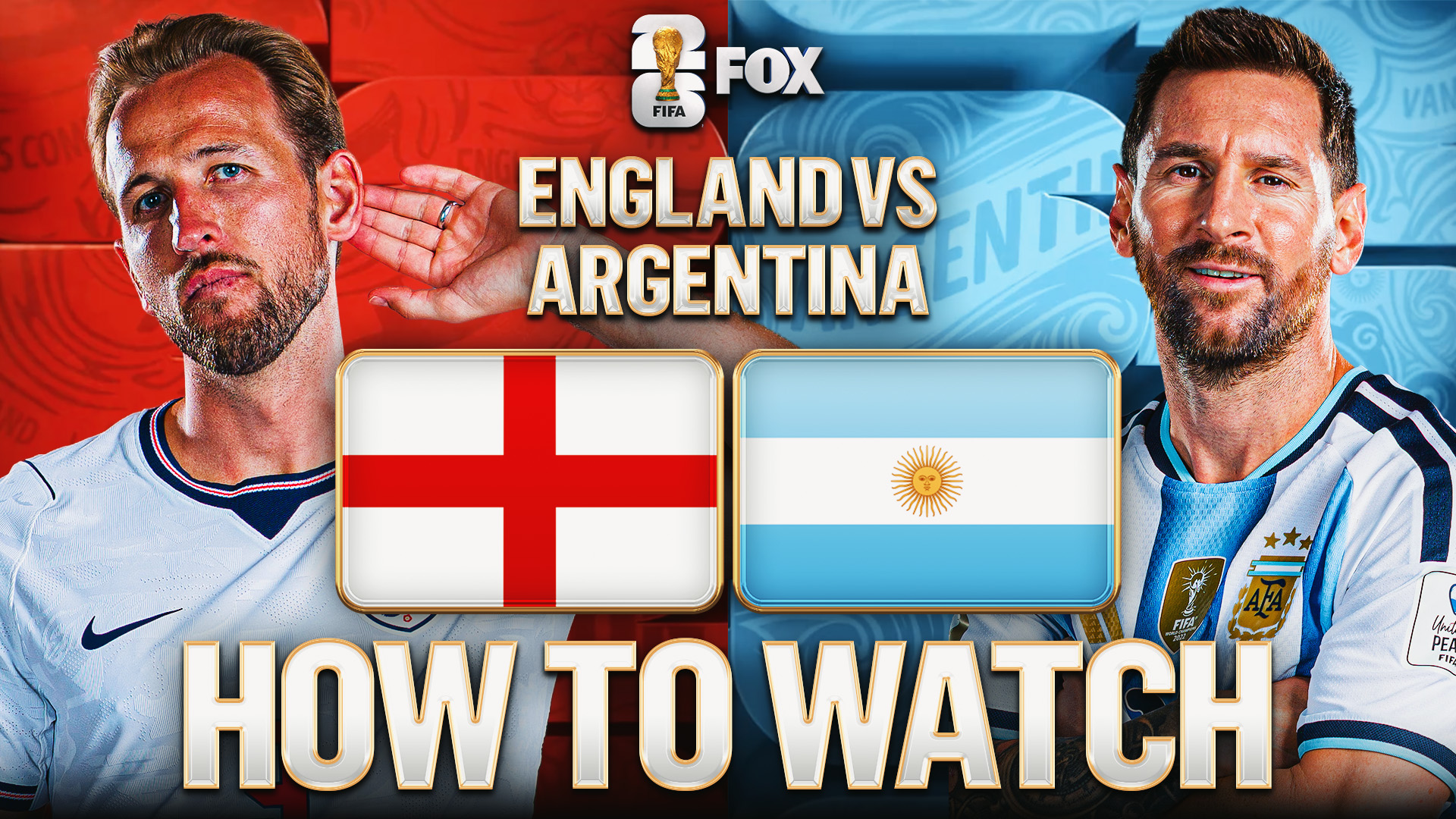
England take on Argentina in the 2026 World Cup semi-final in a clash for the ages, but it is also a rivalry that is responsible for red cards being introduced.
These two football giants have met countless times over the years, creating one of the fiercest international football battles.

You can listen to the latest instalment live on talkSPORT with kick-off in Atlanta at 8pm.
But a meeting at the 1966 World Cup changed the face of the game forever.
During Argentina’s 1-0 loss to England in the quarter-final, Antonio Rattin was sent off but he refused to leave the pitch.
He claimed not to understand German referee Rudolf Kreitlein, who did not speak Spanish.
When he did eventually make his way off, Rattin, who sadly died this week aged 89, crumpled an England corner flag and sat on a red carpet reserved for Queen Elizabeth II in protest.
England manager Alf Ramsey later called Argentina ‘animals’ and it sparked a rivalry that has spanned generations.
This led to FIFA introducing yellow and red cards at the 1970 World Cup to avoid communication problems.
Referee Ken Aston, who was in charge of officials at the 1966 tournament, from London is credited with the idea.
Aston came up with the idea while he was driving in Kensington with amber traffic lights indicating caution and prepare to stop.
Red means stop when it comes to driving, and the Englishman thought this would be a good way to approach dealing with fouls and dismissing players.

The idea developed that a yellow was a warning and a red indicated that your game was over.
This was then trialled at the 1970 World Cup in Mexico.
But it all stemmed from the contest between England and Argentina in the 1966 World Cup, and then was introduced into the wider game.
England versus Argentina controversies
England haven’t faced Argentina for more than 20 years, meaning Lionel Messi has never faced the Three Lions.
But before that friendly, the two have had a few controversial clashes.
1998 World Cup
Diego Simeone managed to turn David Beckham into public enemy number one in the UK.
With the scores locked at 2-2 at half time, Simeone fouled Beckham at the start of the second half.
The winger kicked out at the Argentine, who made the most of it, and he was dismissed.
England lost on penalties, and after the match, manager Glenn Hoddle blamed Beckham, leading to him being crucified in the media.

2002 World Cup
England were reunited with their old foes in the 2002 World Cup.
It wasn’t a knockout stage game like in France, but it was a group stage clash.
Mauricio Pochettino fouled Michael Owen, and Beckham stepped up from the spot.
He blasted the spot-kick home and produced an iconic celebration that signalled his redemption.
1986 World Cup
Perhaps the most controversial moment of these two meeting happened at the 1986 World Cup, which Argentina won.
It is a match Argentina won 2-1, and it is defined by two Diego Maradona moments.
One, is a truly stunning individual goal that is one of the greatest of all time.
The other is one of the biggest controversies in sport.
At The Azteca in Mexico City, a long ball was played into the box that Peter Shilton came out to punch.

But Shilton was beaten to it by a flying Maradona.
The Argentine superstar claimed he had headed it beyond the England goalkeeper, but it was clear he had punched it.
The referee was Ali Bin Nasser, who claimed he saw nothing wrong with the goal.
That made it 1-0 to Argentina before he scored his wonder goal.
Gary Lineker pulled one back for the Three Lions, but they couldn’t equalise.
And after the match, the Maradona goal was dubbed the ‘Hand of God’ by the player himself.
When asked about the goal, he said: “A little with the head of Maradona and a little with the hand of God.”
England have been seeking retribution for that goal ever since, and this semi-final represents a great chance.
What's Your Reaction?
 Like
0
Like
0
 Dislike
0
Dislike
0
 Love
0
Love
0
 Funny
0
Funny
0
 Angry
0
Angry
0
 Sad
0
Sad
0
 Wow
0
Wow
0