









Chargers’ way-too-early 2027 NFL Draft according to PFF mock draft simulator
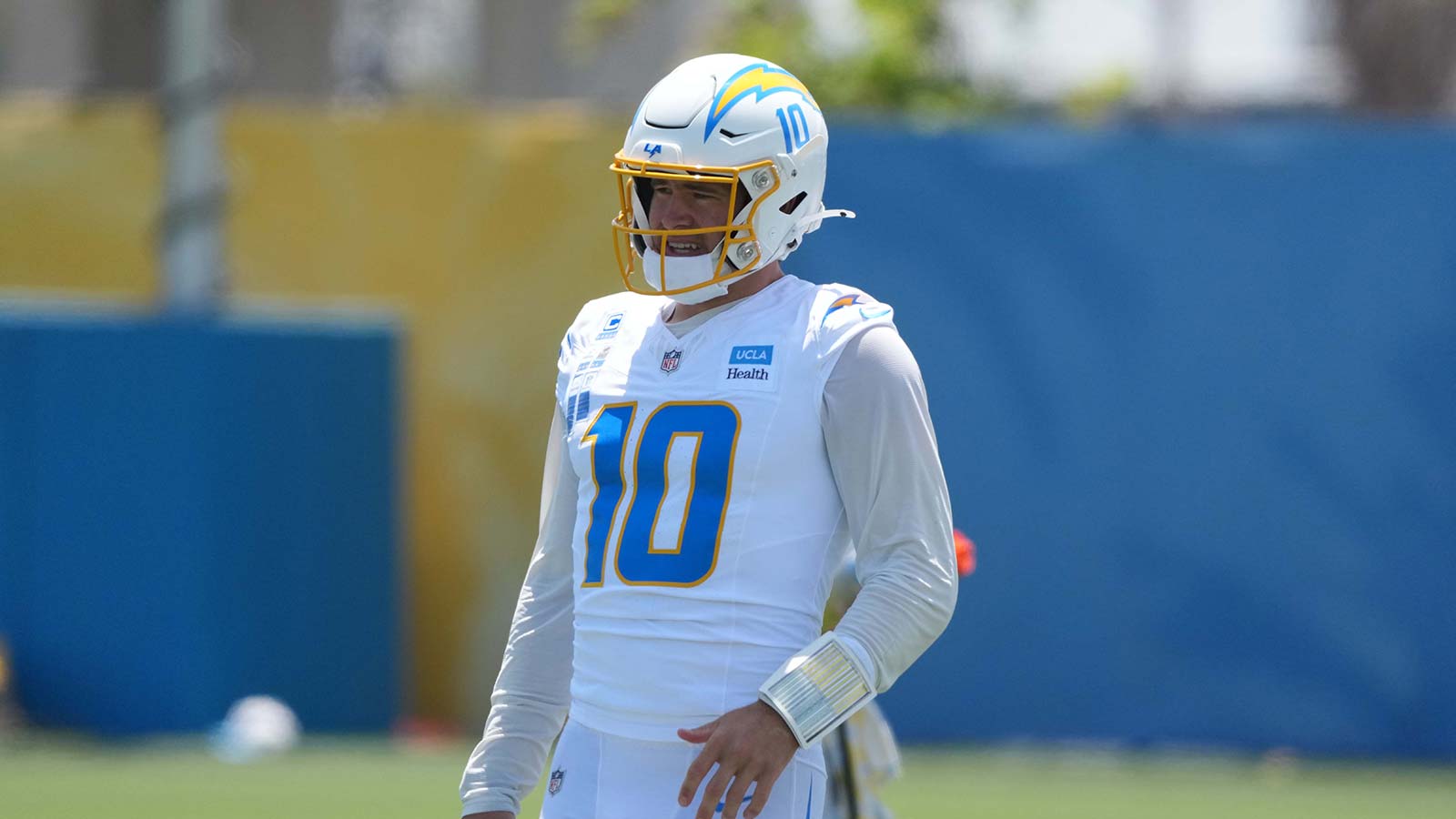
The Los Angeles Chargers boast one of the NFL’s rising defensive stars in Tuli Tuipulotu, who is coming off a season with 13.5 sacks and is entering a significant contract year. Additionally, there’s an interesting backup quarterback storyline developing behind Justin Herbert, as DJ Uiagalelei reportedly competes with Trey Lance for reps while Mike McDaniel adjusts Herbert’s mechanics.
This combination makes the 2027 PFF mock draft simulator class particularly intriguing. The Chargers are talented, but they still need more support around their franchise quarterback and additional affordable depth to complement an increasingly expensive core.
Round 1, Pick 24: KJ Duff, WR, Rutgers
Selecting KJ Duff would be a strategic move for a team looking to maximize Herbert’s prime. Standing at 6-foot-6 and weighing 225 pounds, Duff possesses rare size for a wide receiver. However, he is more than just a jump-ball target, as his breakout season at Rutgers in 2025 showcased his vertical production, big-play ability, and enough downfield speed to challenge corners who might underestimate him as merely a possession receiver.
While the Chargers already have speed and structure in McDaniel’s offense, Duff would provide Herbert with a different type of weapon. He can win contested catches, stretch the field, and pose a significant threat in the red zone. The main concern is whether he can create separation effectively against NFL corners. On the upside, he represents a massive target with explosive potential.
Round 2, Pick 56: Terrance Carter Jr., TE, Texas Tech
Terrance Carter Jr. seems like a perfect fit for McDaniel’s system. Although he isn’t the tallest tight end at 6-foot-2 and 245 pounds, he plays with polish as a receiver and has demonstrated consistent production. After making his mark at Louisiana, he continued to show his skills at Texas Tech, successfully working the seams, finding soft spots, and gaining yards after the catch.
For the Chargers, this selection is about providing Herbert with another reliable option in the middle of the field. A tight end who can move, catch, and threaten linebackers would fit seamlessly in an offense that emphasizes timing and spacing. While Carter may not be a classic in-line blocker, modern tight ends thrive by creating matchup challenges, and he can do just that.
Round 3, Pick 88: Luke Montgomery, G, Ohio State
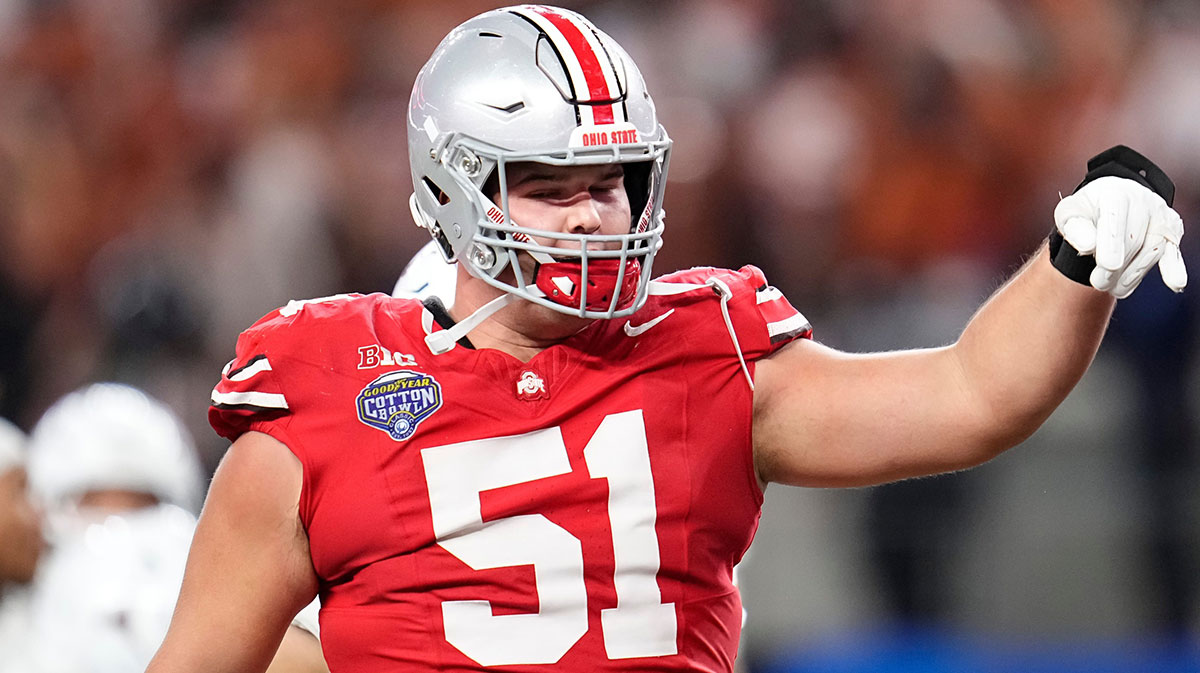
Luke Montgomery is a strategic pick for the Chargers, as protecting Herbert should always be a top priority. Montgomery possesses experience, strength, and a background in the Big Ten that should translate well to the NFL. He became a key component of Ohio State’s offensive line and returned for another season to solidify his status as one of the better interior blockers in the draft class.
The Chargers would not be drafting him for flashiness, but they would be selecting him to stabilize the pocket and enhance their run game. Montgomery has the necessary power, leadership qualities, and athletic ability to excel in space. In the third round, this selection represents strong value.
Round 4, Pick 122: Anthonie Knapp, T, Notre Dame
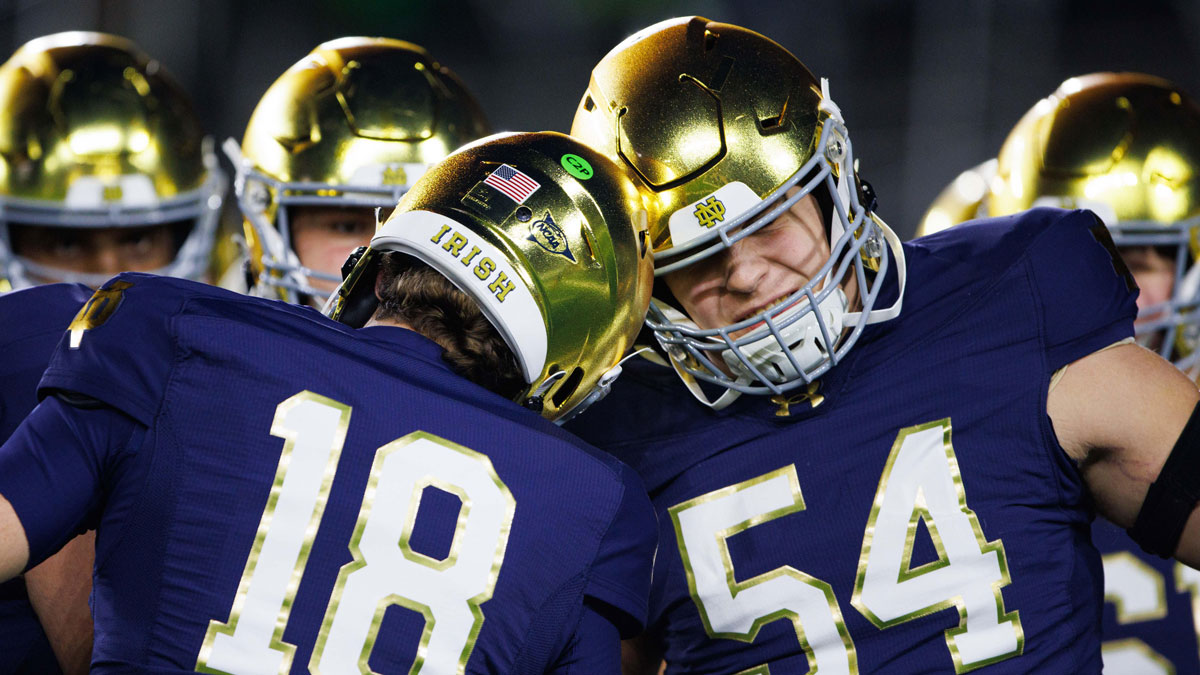
Anthonie Knapp presents an intriguing option as a fourth-round tackle due to his positional versatility. He got early playing time at Notre Dame, faced high-level competition, and exhibits the toughness that offensive line coaches admire. Some evaluators view him strictly as a tackle, while others see him fitting inside.
For them, versatility is key since a team with Herbert cannot afford to have weak backup options on the offensive line. Knapp could compete as a swing tackle, cross-train at guard, and become a valuable depth piece. While he may not be a perfect prospect, Notre Dame linemen generally arrive equipped with solid technical skills, making him a practical Day 3 investment.
Round 4, Pick 131: John Mateer, QB, Oklahoma
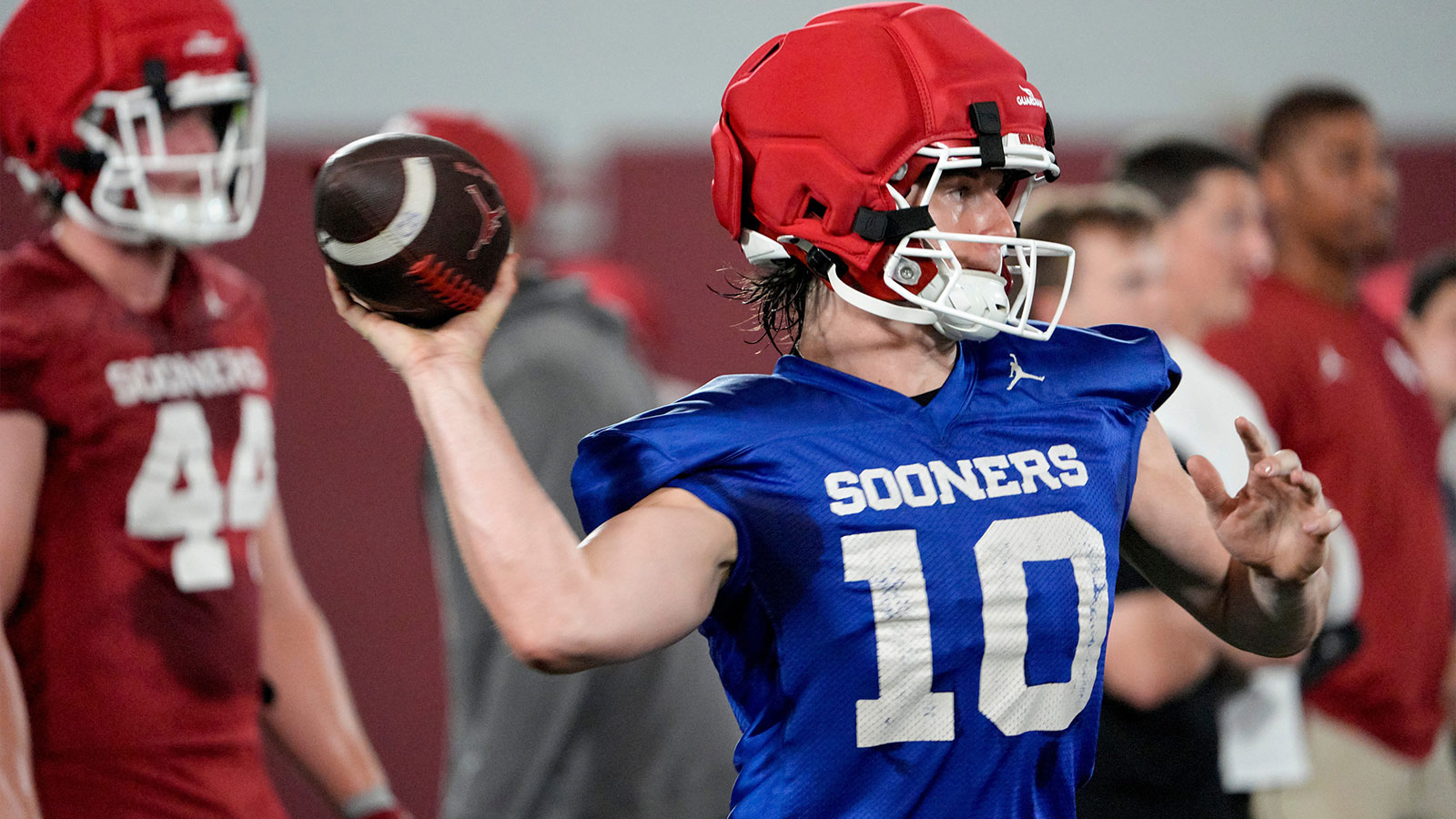
Selecting John Mateer in Round 4 would be a fascinating choice. While the Chargers do not need a starting quarterback, they should consider backup options.
Mateer is a talented and athletic passer who can make plays when the structure breaks down, as he has sufficient arm strength to attack intermediate windows and enough mobility to change a game plan. The concern lies in his consistency, because his deep-ball accuracy, decision-making, and overall rhythm can fluctuate.
As such, he would be better suited as a developmental quarterback rather than an immediate NFL starter. Behind Herbert, Mateer could learn without the pressure of starting, which is exactly the environment a talented quarterback needs.
Round 5, Pick 162: Dylan Riley, HB, Boise State
Dylan Riley offers the Chargers a productive running back with burst and receiving capabilities. At Boise State, Riley proved he could handle significant workloads, create explosive runs, and contribute to the passing game, and even he is not the largest back, he runs decisively enough to avoid being labeled as just a situational player.
His ball security is also impressive, particularly for a Day 3 back trying to earn trust quickly. In McDaniel’s offense, backs who can quickly reach the edge and make decisive cuts are highly valued. Riley would not need to be the featured runner right away; instead, he could vie for rotational touches and play a role on special teams while adding more explosiveness to the offense.
Round 6, Pick 202: Austin Romaine, LB, Texas Tech
Austin Romaine is the type of sixth-round linebacker who can make a lasting impact because he plays with purpose. Standing at approximately 6-foot-2 and weighing around 245 pounds, his production at Kansas State before transferring to Texas Tech demonstrates his ability to find the ball. He has proven to be effective against the run, a productive tackler, and sufficiently physical to project as a special teams contributor.
The Chargers need affordable defensive depth, especially as they allocate funds to edge rushers and offensive stars. Romaine would start as a backup linebacker, but his path to making the roster is clear: tackle effectively, cover kicks, and prove his capability in sub-packages.
Round 7, Pick 240: Jaden Bray, WR, West Virginia
Jaden Bray is precisely the type of receiver worth considering in the seventh round. He has a solid frame at 6-foot-2 and over 200 pounds, along with experience from multiple programs. His college career hasn’t been entirely linear, but he has shown flashes of contested-catch ability, vertical playmaking, and toughness after the catch.
For a late-round pick, the Chargers require potential, and Bray has the size and field-stretching ability to compete in training camp, especially if he can demonstrate his value on special teams. With the addition of Duff earlier, drafting Bray would further enhance the competition in the receiver room.
This draft class focuses on supporting Justin Herbert while also addressing the overall needs of the roster. They have added size at receiver, a productive receiving tight end, several offensive line prospects, a developmental quarterback, and Day 3 depth at running back, linebacker, and receiver. While it may not be the flashiest class overall, it follows a clear strategy.
Los Angeles has a solid quarterback and an emerging pass rusher, with a coach working to modernize the offense. The next step is to ensure the roster doesn’t become overly reliant on expensive stars, and this is where a draft class like this is significant, because it provides the Chargers with more answers, increased competition, and better protection against the challenges that often arise late in a long season.
The post Chargers’ way-too-early 2027 NFL Draft according to PFF mock draft simulator appeared first on ClutchPoints.
What's Your Reaction?
 Like
0
Like
0
 Dislike
0
Dislike
0
 Love
0
Love
0
 Funny
0
Funny
0
 Angry
0
Angry
0
 Sad
0
Sad
0
 Wow
0
Wow
0