






Bengals’ 7-round 2026 NFL Draft according to PFF mock draft simulator after NFL Combine
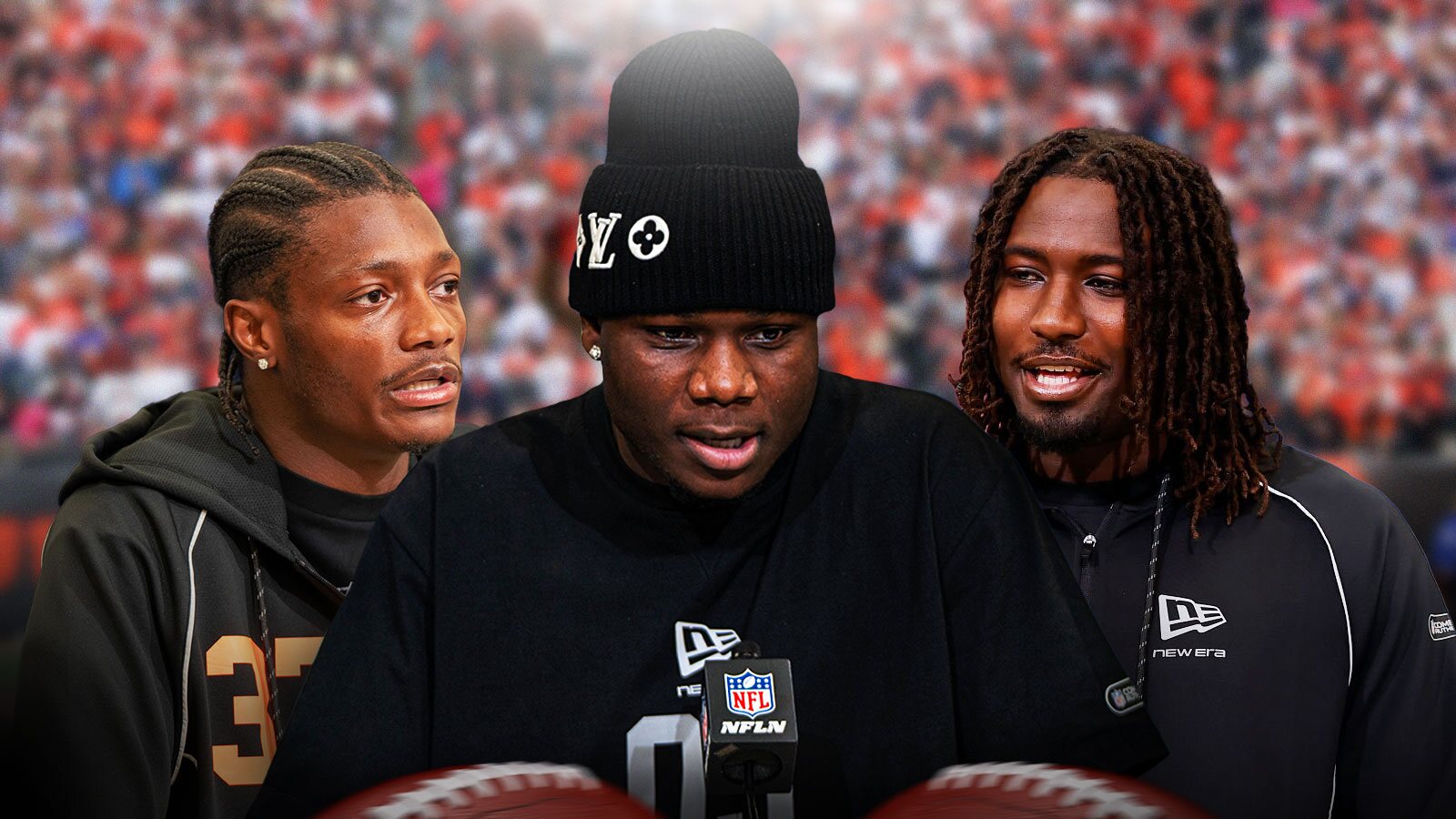
The NFL Combine clarified urgency. For the Cincinnati Bengals, the message coming out of Indianapolis was unmistakable. Joe Burrow’s prime cannot withstand another incomplete roster. The Bengals enter the 2026 NFL Draft holding the 10th overall pick. They have a great opportunity but are also burdened by recent underachievement. This post-Combine PFF mock draft reflects a franchise making bold bets. They need to double down on offensive firepower while attempting to patch defensive vulnerabilities that have quietly defined their last three seasons.
Draft priorities
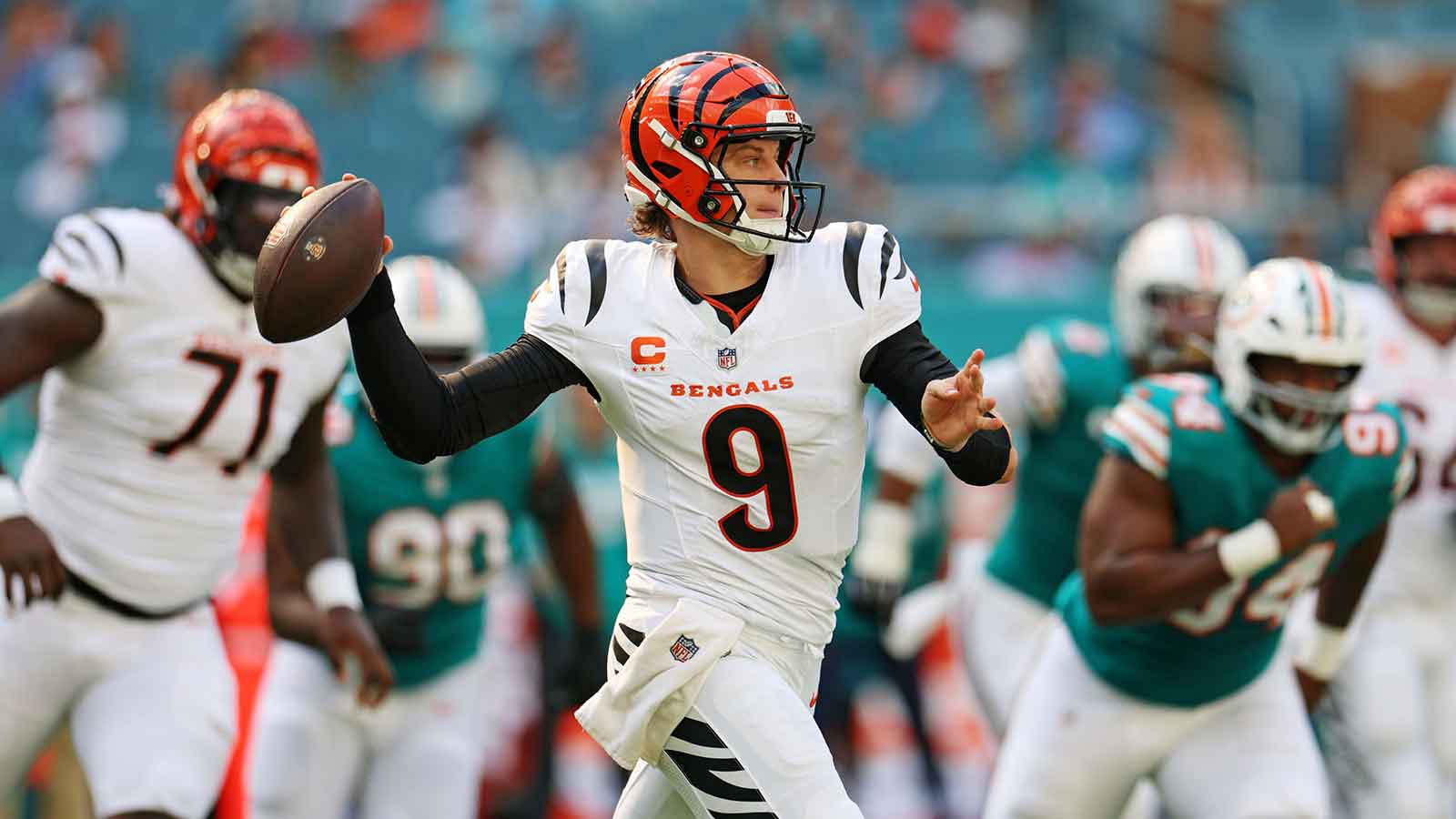
Heading into the 2026 NFL Draft, the Bengals must aggressively address a defense that ranked near the bottom of the league in 2025. The most pressing priority is the secondary, specifically at safety. That’s where the team is searching for a high-IQ playmaker to anchor a unit that has lacked consistency since the departure of veteran leaders. The likely loss of star pass rusher Trey Hendrickson in free agency also creates a massive void on the edge. That necessitates a premium investment in a disruptive force. Sure, the re-signing of guard Dalton Risner provided some stability to the offensive line. However, the Bengals still require better interior defensive line depth and off-ball linebacker support. They must avoid wasting another year of Burrow’s prime following three consecutive seasons without a playoff appearance.
Round 1, pick 10: WR Carnell Tate, Ohio State
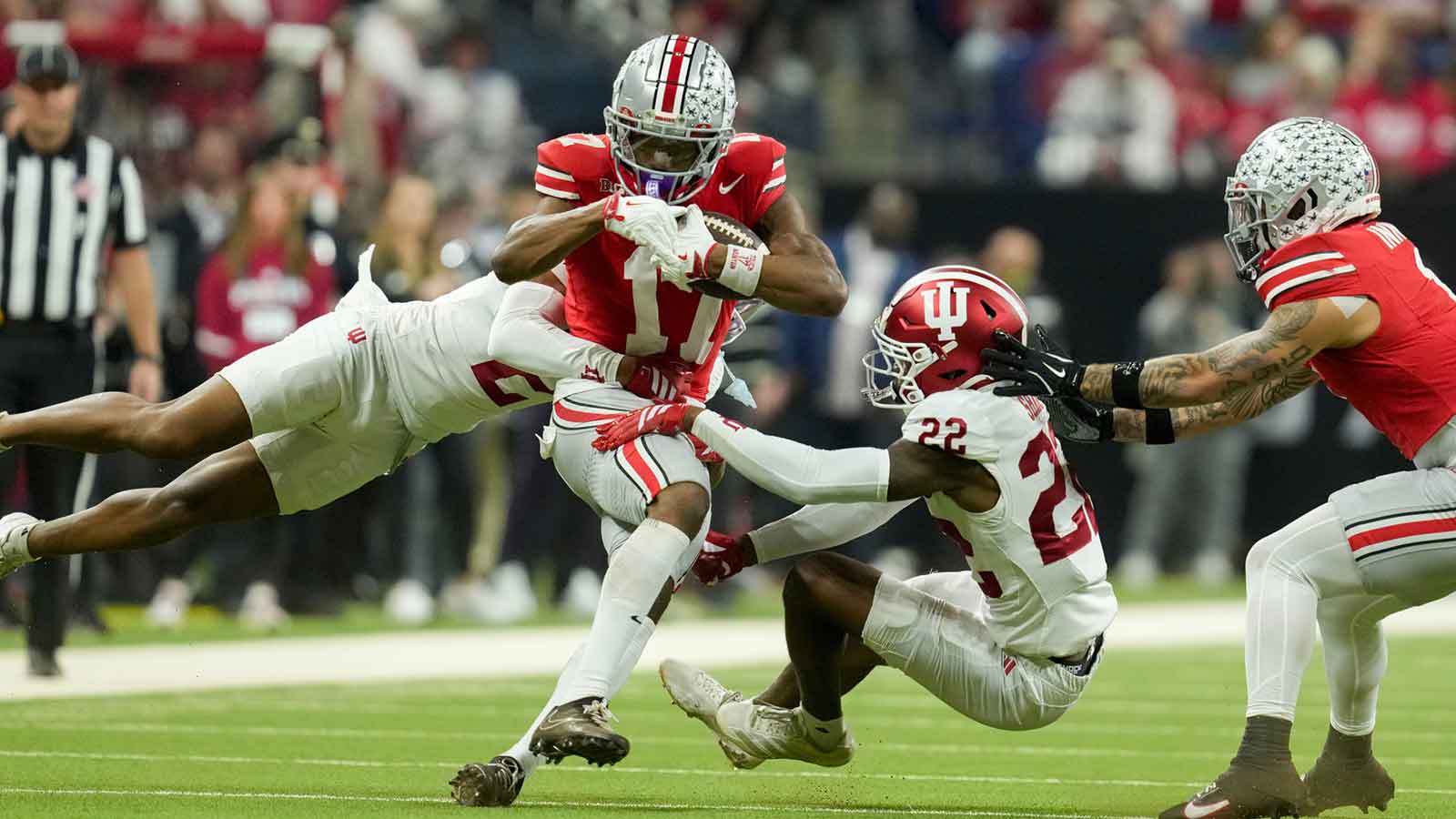
This selection will spark debate, and perhaps that is the point. Tate is a long-framed, high-catch-radius receiver. He profiles as a boundary X with the strength to block and the body control to win in contested situations. Yes, Cincinnati’s needs lean defensive. Still, pairing Burrow with another big-bodied target could make the offense even more unguardable. Tate still needs to improve twitch and add functional strength. That said, his ceiling as a possession-plus vertical threat makes him a compelling top-10 bet.
Round 2, pick 41: WR Chris Bell, Louisville
Doubling down at wide receiver may appear indulgent. Yet, it underscores Cincinnati’s philosophy in this simulation: overwhelm defenses. Bell’s breakout production and ability to generate yards after the catch make him a natural vertical complement. His strength and explosiveness allow him to stretch coverage. However, his route nuance and blocking discipline require refinement. If he polishes those details, Bell could become a consistent explosive-play generator.
Round 3, pick 72: EDGE Malachi Lawrence, UCF
Lawrence is where the defensive rebuild begins. He brings prototypical size, length, and a deep pass-rush bag that translates to early pressure potential. His suddenness off the snap and ability to counter inside or outside create matchup headaches. Consistency in run support remains an area for growth. Still, Lawrence’s upside as a disruptive force makes him a worthwhile investment in a post-Hendrickson era.
Round 4, pick 110: DL Tim Keenan III, Alabama
Keenan offers what Cincinnati sorely lacked against the run: leverage and anchor. As a traditional nose tackle, he plays with strength and effort. He occupies space and limits interior lanes. Yes, his pass-rush repertoire is limited. That said, his role clarity makes him valuable. The Bengals do not need Keenan to collapse pockets. They just need him to hold the line.
Round 6, pick 188: S Bishop Fitzgerald, USC
Fitzgerald injects ball skills into a secondary searching for takeaways. In coverage, he can capitalize on opportunities to flip field position. His run support inconsistency and pursuit angles require coaching. However, his instincts in coverage align with Cincinnati’s need for smarter, assignment-sound safety play.
Round 6, pick 198: RB Desmond Reid, Pittsburgh
Reid is a classic Day 3 swing on explosiveness. At 5-foot-8 and 175 pounds, size concerns are legitimate. Yet his production, receiving versatility, and special teams value create a defined role as a change-of-pace back. Cincinnati’s offense thrives on spacing and tempo. Reid’s quickness fits that mold.
Round 7, pick 226: WR Caleb Douglas, Texas Tech
Douglas rounds out the draft as a developmental perimeter option. His catch radius and ability to win on fades show promise. Focus drops and contested-catch inconsistency, though, limit immediate projection. With refinement, Douglas could compete for depth snaps in a crowded receiver room.
Strategy behind the boldness
This mock draft reflects a high-variance philosophy. Rather than prioritizing interior offensive line depth or early safety help, Cincinnati loads up on offensive weapons while trusting mid-round defenders to grow into roles. The approach hinges on the belief that overwhelming offensive output can mask defensive growing pains while Lawrence and Keenan stabilize the front.
Critics will argue that passing on premium safety talent early ignores a glaring need. Supporters will counter that in today’s NFL, elite quarterback play paired with diversified weapons creates margin for error. The Bengals appear willing, in this projection, to bet on their franchise quarterback dictating outcomes rather than merely surviving them.
Gambling on offensive dominance
This post-Combine PFF mock draft does not play it safe at all. It plays it ambitious. Cincinnati prioritizes adding size and explosiveness to Burrow’s arsenal while reinforcing the defensive front with developmental upside. Whether that balance proves sufficient depends on growth from Lawrence, Fitzgerald, and Keenan. One thing is clear, though: the Bengals are choosing aggression over caution. And sometimes, with a quarterback like Burrow, that is the only path forward.
The post Bengals’ 7-round 2026 NFL Draft according to PFF mock draft simulator after NFL Combine appeared first on ClutchPoints.
What's Your Reaction?
 Like
0
Like
0
 Dislike
0
Dislike
0
 Love
0
Love
0
 Funny
0
Funny
0
 Angry
0
Angry
0
 Sad
0
Sad
0
 Wow
0
Wow
0
-(1).jpeg?#)