







adidas Trionda Pro review: Is this the best World Cup ball yet?

World Cups only come around once every four years, so I needed no convincing to test out the official match ball – the adidas Trionda Pro.
Since 1970, adidas has produced some iconic footballs for the beautiful game’s showpiece event – from the classic Tango to the unpredictable Jabulani in 2010 and 2014’s stylish Brazuca.

FIFA World Cup 26 Trionda Pro Ball, £130
It’s no different this summer, with the three-striped sportswear giant again providing a memorable design for an historic tournament.
For the first time, the 2026 World Cup is being hosted by three nations – USA, Canada and Mexico – and the adidas Trionda Pro pays tribute to each of them.
Boasting red, green and blue graphics to represent their colours, the name combines ‘tri’ for the three countries and ‘onda’ (Spanish for ‘wave’) in a nod to Mexico.
There’s new technology on show too, with the ball featuring a brand-new four-panel construction – fewer panels than previous models.
It also has purpose-built grooves designed to produce a faster, more consistent flight pattern as the ball travels through the air.
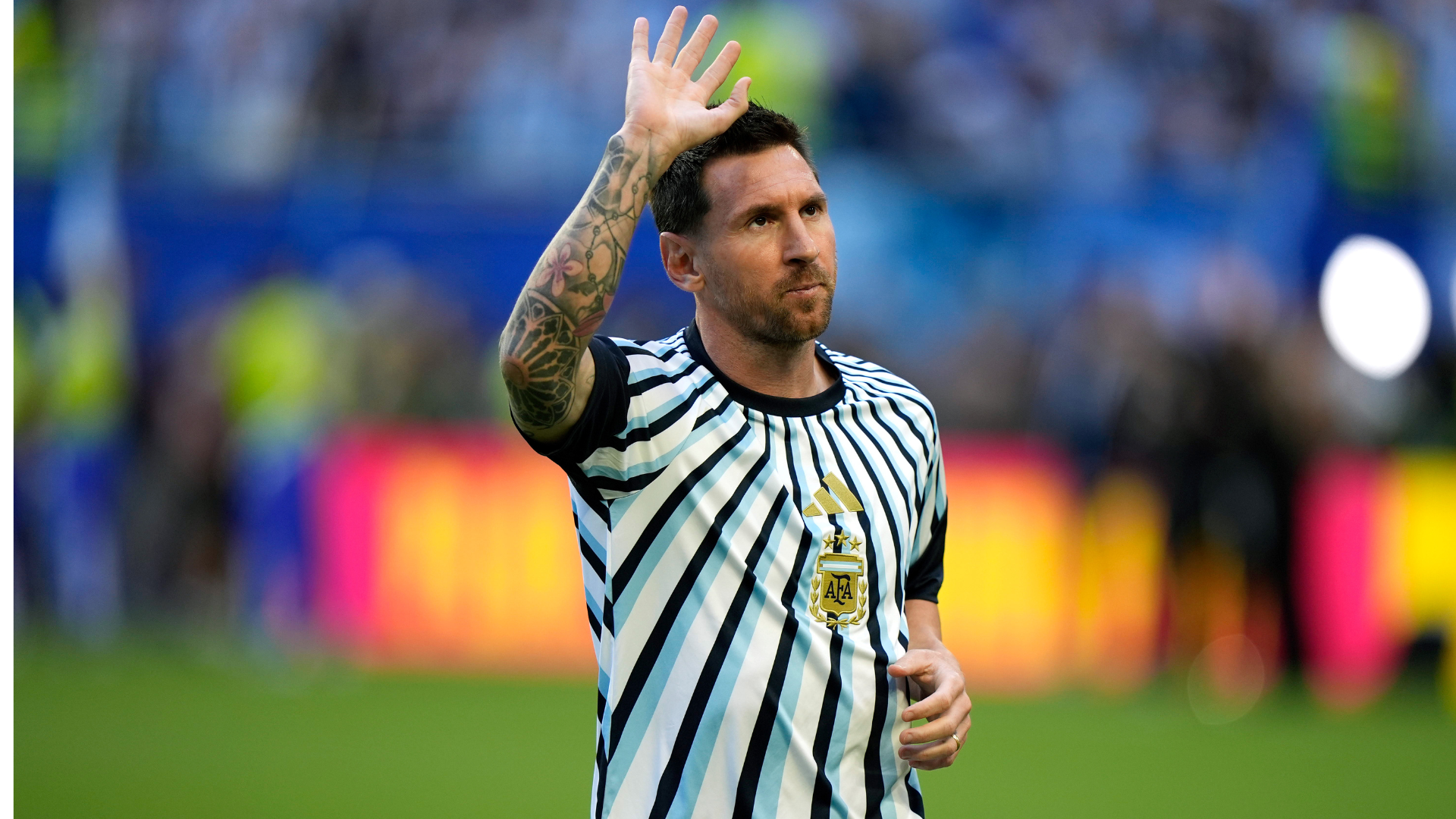
Erling Haaland, Lionel Messi, Kylian Mbappe and Harry Kane have all quickly got the hang of the Trionda, so after seeing football’s leading names enjoy a kickabout with it, I decided to give it a go myself.
adidas Trionda Pro: quick summary

FIFA World Cup 26 Trionda Pro Ball, £130
Pros:
- Moves true in the air
- A fun ball to play with
- Nice, extra-grippy feel thanks to the ball’s panels and grooves
- Eye-catching colourway makes for an attractive, memorable match ball
Cons:
- Price – £130 is a lot for any match ball replica
At first glance, it’s hard not to be drawn to the Trionda Pro’s vibrant design, which sets it apart from other World Cup match balls.
While most of adidas’ previous World Cup footballs have been predominantly white, the Trionda bucks the trend by having three bold colours covering most of its surface.
Also dotted across the ball are a maple leaf for Canada, an eagle for Mexico and a star for the United States, all of which add to the sentimental value and detail.
From a visual standpoint, this ball is truly unique, with a colourway that will surely mean it lives long in the memory of football fans.
And after heading out on the pitch and testing the Trionda, I was sold on it on all fronts.
The advanced panels and grooves create a ball with extra grip and feeling, making it really enjoyable to both strike and control.
And when passing and shooting, I found that the ball moved true in the air; it moves, but not too much, which has been said about previous World Cup match balls.
After enjoying a kickabout in a partner training session, I couldn’t wait to head back out and let loose with the Trionda again.
adidas Trionda Pro: full review

FIFA World Cup 26 Trionda Pro Ball, £130
Opening the adidas Trionda Pro makes for a pretty cool unboxing experience.
The World Cup’s official match ball comes packaged in a commemorative gift box.
As someone who doesn’t normally buy official match ball replicas, this was a bit of a novelty to me, and I certainly appreciated the extra touch.
Housed in a branded black display box featuring official 2026 World Cup graphics, it even boasts a handle at the top.
But what about the ball itself?
The red, green and blue graphics paying tribute to the host nations are a lovely touch, as are the additions of a maple leaf, eagle and a star dotted across the ball.
These features truly set the Trionda apart as a memorable World Cup ball.
After making my way to my local grass pitch, I first decided to try out the Trionda with some short-range passing and touch work.
As mentioned, the grooves all over the surface of the ball give an extra grippy feel, and this was certainly the case when controlling the ball.
When bringing it down from the air, I felt these features provided an added feeling of control.
This was similar when dribbling: it felt ever so slightly more glued to my feet thanks to the extra texture.
As for the feel of the ball itself, I was instantly drawn to it’s two main technological features.
The four-panel ball construction and purpose-built grooves are a standout, giving the Trionda added grip and a professional feel.
After taking in the cool design and getting a feel for the ball, I headed out to the pitch to test it out with a friend.
After making my way to my local grass pitch, I first decided to try out the Trionda with some short-range passing and touch work.
As mentioned, the grooves all over the surface of the ball give an extra grippy feel, and this was certainly the case when controlling the ball.
When bringing it down from the air, I felt these features provided an added feeling of control.
This was similar when dribbling: it felt ever so slightly more glued to my feet thanks to the extra texture.
As for passing, the Trionda has an almost cushioned, sponge-like feel to it, providing extra feeling when kicking it.
Now for arguably the most important part – striking the ball.
How World Cup match balls move in the air has become a real talking point in recent years – think the Jabulani in 2010, which was notorious for its wild movement when struck with a ‘knuckleball’ technique.
And if fans were expecting the Trionda to be similar, fair warning: this isn’t the same thing.
When it came to striking the ball, I was impressed with how enjoyable it felt using various techniques.
I began with some long-range lofted passes before moving on to crossing; I found there was a lovely, firm, responsive feel with both.
The ball moved true through the air, which could again be put down to the featured four-panel construction and grooves, which lower drag as it flies.
Thanks to this, the ball doesn’t fly away and move too unpredictably; instead, these technical features result in a more consistent flight pattern.
It was a similar case when it came to shooting, with a cushioned feel when first striking it, which then turned into a nice, firm, responsive sensation as I put my foot through it.
Practising shots with a whipped, curling technique, I found that the Trionda responded really well to the spin I was putting on it.
And I was still able to generate more movement on the ball with a ‘knuckleball’, too.
Despite the Trionda’s grooves and panels being designed to reduce drag and unpredictable movement, it is possible to cause the ball to fly flat through the air, albeit without it moving as wildly as previous models.
I found all of the above features to make for a reliable, stylish and enjoyable football to play with, and I couldn’t wait to head back out a few days later for an individual session with the Trionda.
One slight con I would mention is the ball’s grippy feel when training on a dry surface.
I tested the Trionda out on a grass pitch on a hot June day, and for my first session, I trained in my adidas Predator boots, which feature specific grip zones.
The added grip features on the Trionda and my boots, combined with the sticky pitch conditions, meant that at times, the ball almost stuck to my feet too much.
But after changing into my Skechers SKX01 boots for the next session, this became less of a concern.
This was pretty much my only gripe though, and otherwise I was completely won over by the adidas Trionda Pro.
How much is the adidas Trionda Pro?
The adidas Trionda Pro match ball can be bought for £130 directly from adidas.
With the Trionda Pro being the official World Cup match ball, other versions of it are available for less.
At £50, the adidas Trionda Competition ball is the first of the ball’s takedown models, while the next grade down, the adidas Trionda League, costs £35 on the brand’s official website.
The adidas Trionda Club and Trionda Training balls can then be bought for £23 and £25, respectively.
The adidas Trionda Pro can also be bought from other sports retailers, including JD Sports and Pro:Direct Sport.
The verdict

FIFA World Cup 26 Trionda Pro Ball, £130
Despite a rather steep price, there can be little doubt that the adidas Trionda Pro delivers all-round as a high-quality, eye-catching World Cup match ball.
It’s great fun to play with, and its technical features brought subtle boosts to all areas of my game.
It was enjoyable to strike, with the four-panel ball construction and grooves allowing the ball to sail through the air as I wished.
At the same time, these elements made it enjoyable to pass, control and dribble.
I also couldn’t get enough of the ball’s design: its colour and vibrancy make it a unique, memorable piece of World Cup memorabilia.
What's Your Reaction?
 Like
0
Like
0
 Dislike
0
Dislike
0
 Love
0
Love
0
 Funny
0
Funny
0
 Angry
0
Angry
0
 Sad
0
Sad
0
 Wow
0
Wow
0